
11 Best Day Trips from Málaga by Car or Bus: Hidden Treasures Beyond the Train Lines
Málaga’s Maria Zambrano station and the efficient Cercanías commuter train line make it incredibly easy to zip down the coast to Torremolinos or catch a high-speed train inland to Antequera. If you are focusing your trip around the rail network, you can explore our complete day trips from Málaga by train guide to see exactly where the tracks can take you. But if you only stick to the tracks, you are missing out on the true heartbeat of southern Spain.
The real magic of Andalucía is tucked away in the rugged mountain folds, along winding cliffside roads, and in sleepy whitewashed villages where the train whistle never blows. To reach these places, you need to grab the steering wheel of a rental car or navigate the local bus routes.
If you are ready to leave the train stations behind and discover the unspoiled, authentic side of the region, here are 10 incredible day trips from Málaga accessible only by car or bus.
Where to Book: Essential Transport & Car Rental for Your Day Trips
To truly unlock the magic of Andalucía’s hidden mountain villages, having your own wheels or booking a guided coach transfer is essential. Click the links below to secure the best rates and guarantee your transport before you travel.

Description: The ultimate tool for exploring mountain roads like Comares or Júzcar. Discover Cars compares top local and international rental brands at Málaga Airport, giving you the best price, flexible cancellation, and full insurance coverage with no hidden fees.
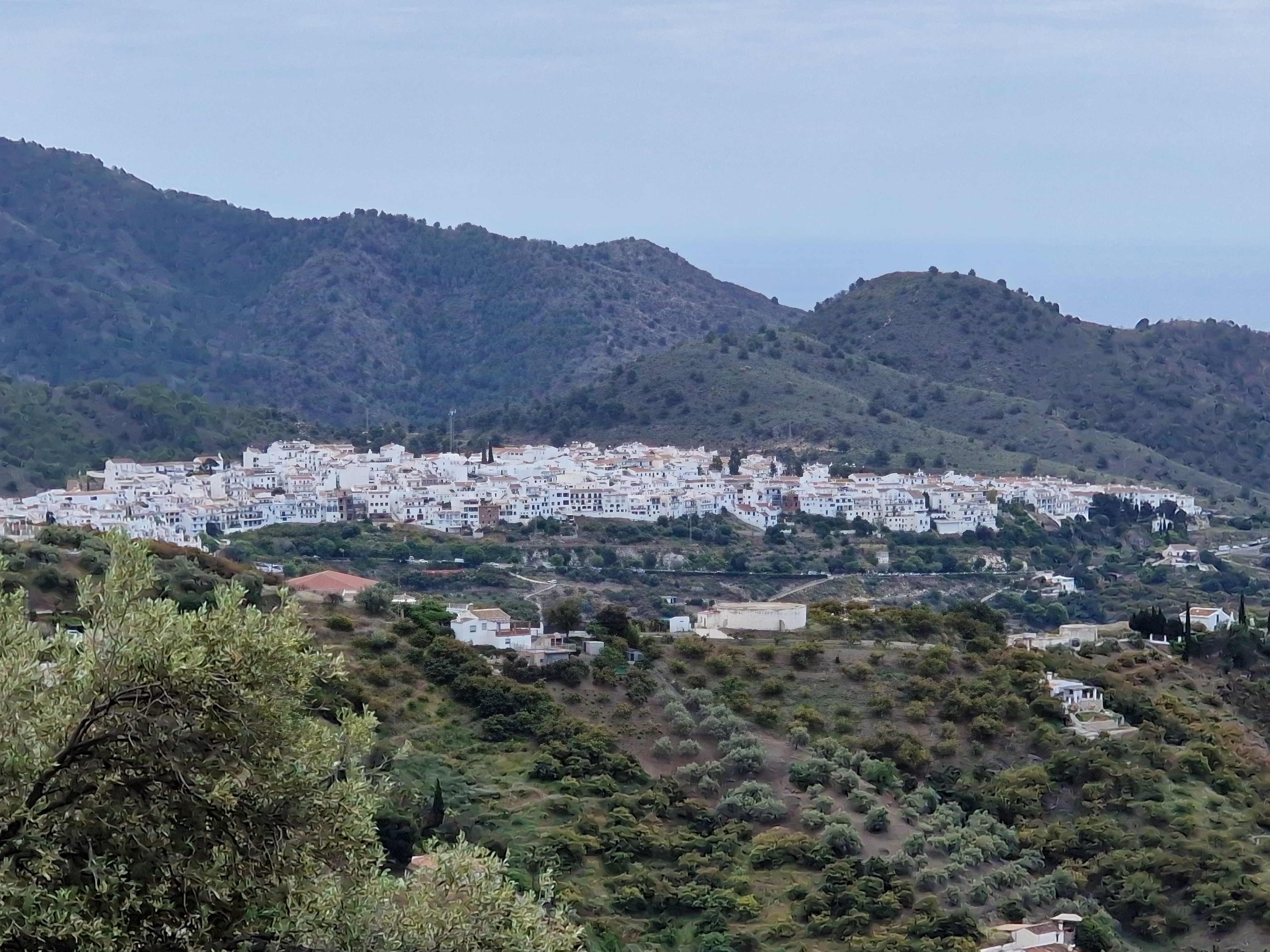
1. Comares: The Cliffside Eagle's Nest
Perched high in the Axarquía mountains, Comares is one of the most visually striking villages in southern Spain. Built on a sheer cliff face over 700 meters above sea level, it served as a strategic military lookout during the Moorish era.
Today, visiting Comares feels like stepping into a labyrinth of history. The streets are incredibly steep, narrow, and whitewashed, decorated with ceramic tiles that tell the story of the village’s Islamic past. Follow the blue footprints painted on the cobblestones to take a self-guided walking tour of the historic center.
Highlights: The panoramic views of the surrounding olive groves from the old castle ruins, and the historic Aljibe (Moorish water cistern).
Getting there: Driving is the best option via the A-7056; it takes about an hour from Málaga. A local bus service runs from Málaga, but schedules are limited, making a car much more practical.
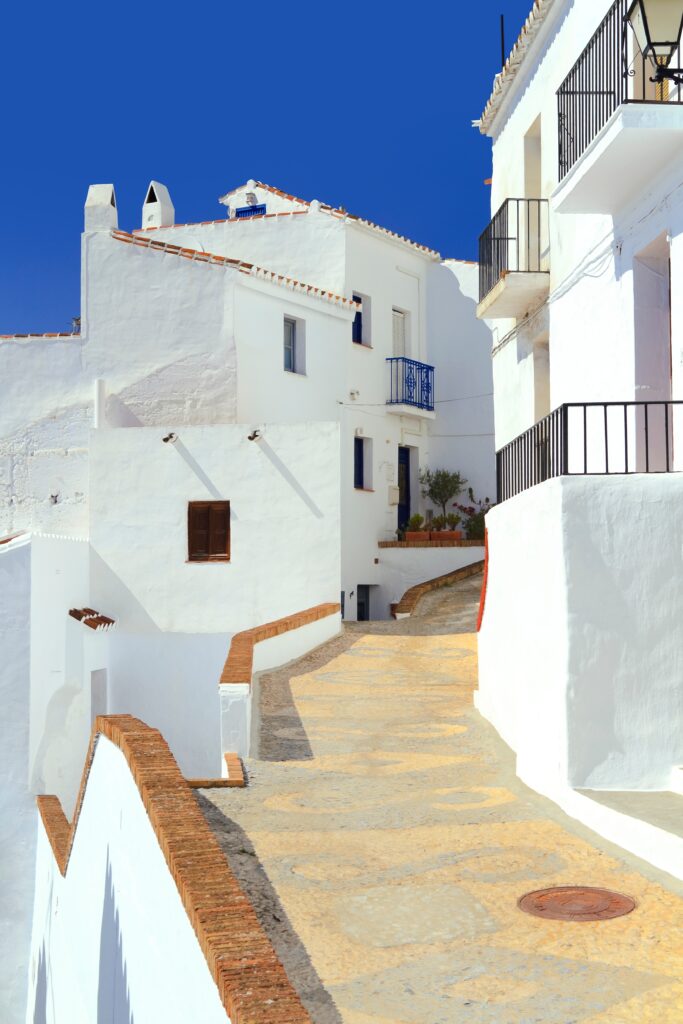
2. Frigiliana: The Moorish Pearl of the Axarquía
While Frigiliana is no longer a secret, it remains an absolute must-visit. Because no train tracks can navigate the steep terrain leading up from Nerja, the village has preserved its flawless mudéjar architecture.
Divided into a newer lower section and the historic upper quarter (Barrio Morisco), Frigiliana is a paradise for photographers. As you climb the stone steps, you’ll be treated to vibrant blue doors, cascading bougainvillea, and stunning glimpses of the Mediterranean Sea in the distance. It’s also home to Europe’s only remaining traditional sugar cane molasses factory, El Ingenio.
Highlights: Sampling local sweet wine, buying handmade ceramics, and exploring the historic Three Cultures square.
Getting there: An easy 45-minute drive from Málaga via the A-7 highway. Alternatively, take an ALSA bus from Málaga to Nerja, and then hop on the cheap, regular local shuttle bus up to Frigiliana.
3. Mijas Pueblo: Donkey Paths and Whitewashed Charm
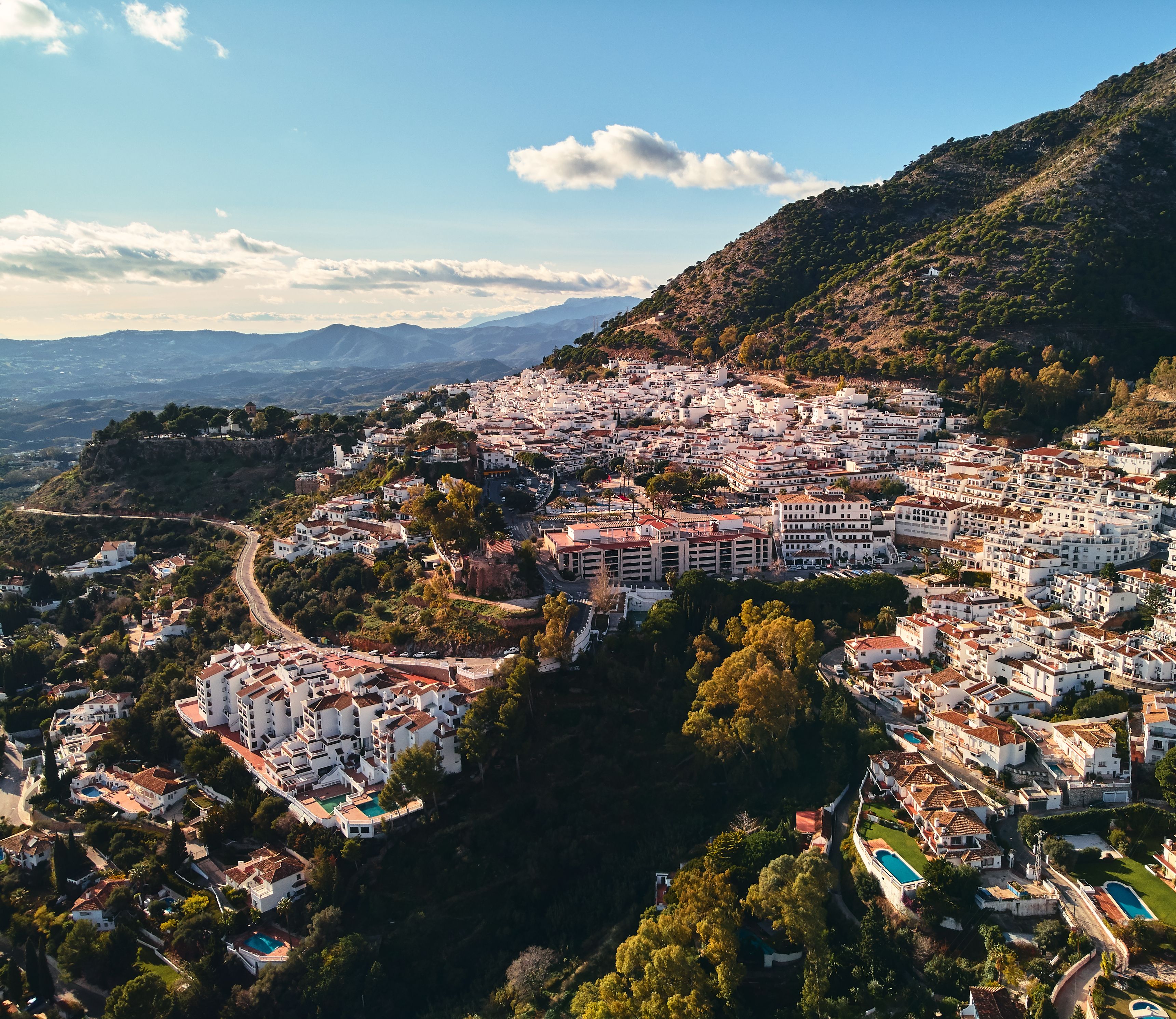
Tucked into the mountainside directly above the bustling resort town of Fuengirola, Mijas Pueblo offers a serene, traditional escape from the coastal high-rises. It is famous for its whitewashed houses, red-tiled roofs, and stunning viewpoints overlooking the Fuengirola coastline.
Wander down the narrow street of Calle San Sebastián for the iconic Mijas photo, visit the unique bullring with its unusual oval shape, or step inside the tiny chapel of the Virgen de la Peña, which was carved directly into a solid rock face by monks in the 17th century.
Highlights: Walking along the ancient fortress walls (Muralla) and exploring the botanical gardens with coastal views.
Getting there: A 30-minute drive via the AP-7. By public transport, take the commuter train from Málaga to Fuengirola, and catch the M-122 bus directly from the Fuengirola bus station up to the pueblo.
4. Ronda: The Dramatic Cliffside Masterpiece
Ronda is one of Spain’s oldest and most romantic towns. While there is a slow, infrequent train route that links Ronda to other inland hubs, getting there from Málaga is infinitely faster, cheaper, and more scenic by car or direct bus.
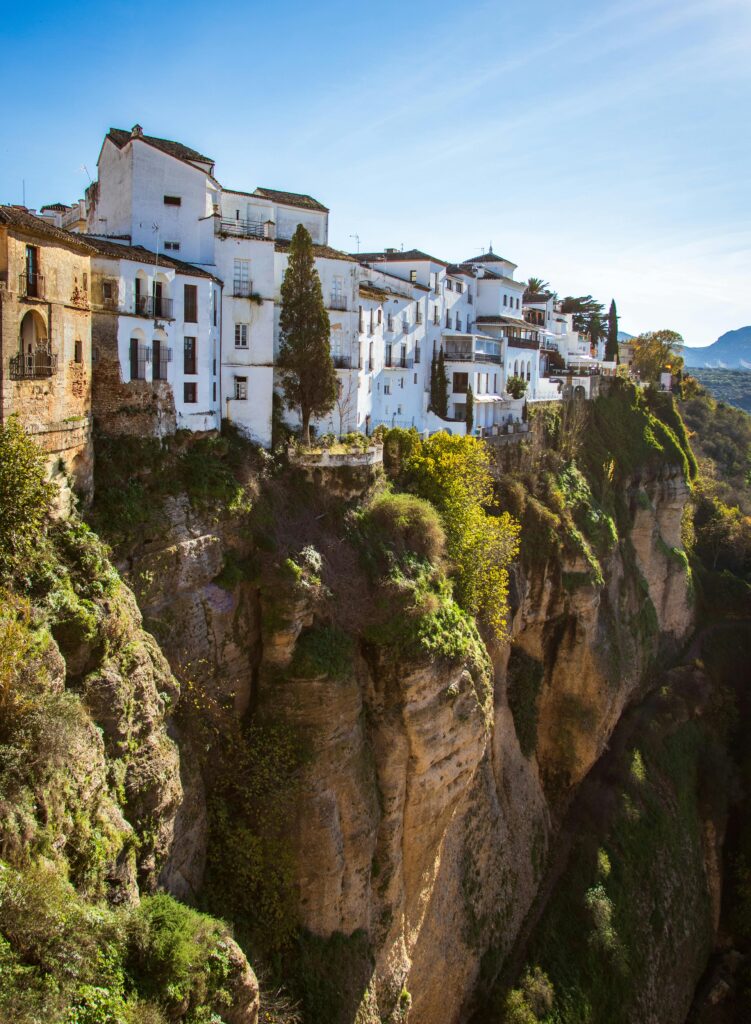
The town is famously split in two by the El Tajo gorge, a breathtaking 120-meter drop. Spanning this chasm is the magnificent Puente Nuevo (New Bridge), built in the late 18th century. Ronda is also the birthplace of modern Spanish bullfighting, and its historic stone ring is legendary.
Highlights: Walking down the gorge trail for a dramatic view looking up at the bridge, and exploring the peaceful Mondragón Palace gardens.
Getting there: About 1 hour and 30 minutes by car via the scenic A-367, or a direct coach ride from Málaga’s main bus station via Avanza.
Where to Stay: Exceptional Overnight Escapes Beyond Málaga
If you want to experience the true romance of Andalucía after the day-trippers leave, spending a night in a historic boutique hotel is unforgettable. We have selected two incredible properties with unmatched views. Click “Check Availability” to secure your dates.
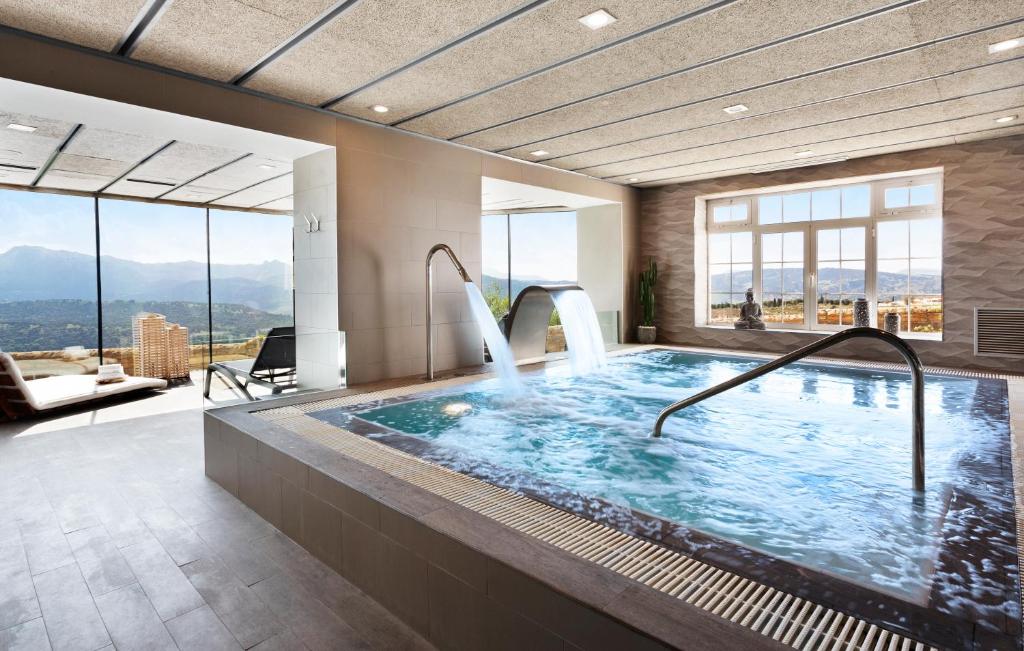
A spectacular 4-star boutique hotel perched right on the edge of Ronda’s dramatic pine-forested cliffs. Features a luxury wellness spa, a stunning outdoor pool garden, and modern rooms with private balconies looking over the valley.
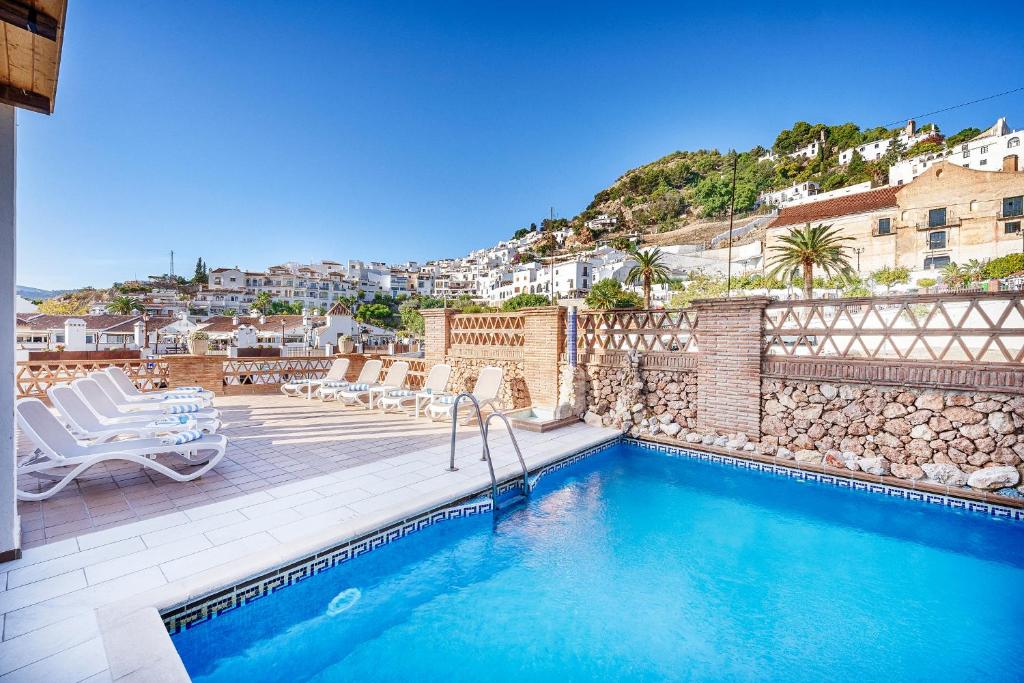
Description: Beautifully located right at the entrance of the historic white village quarter. This charming hotel offers bright rooms with private balconies, an outdoor pool with panoramic views of the Sierra Almijara, and the perfect base for exploring Frigiliana after sunset.
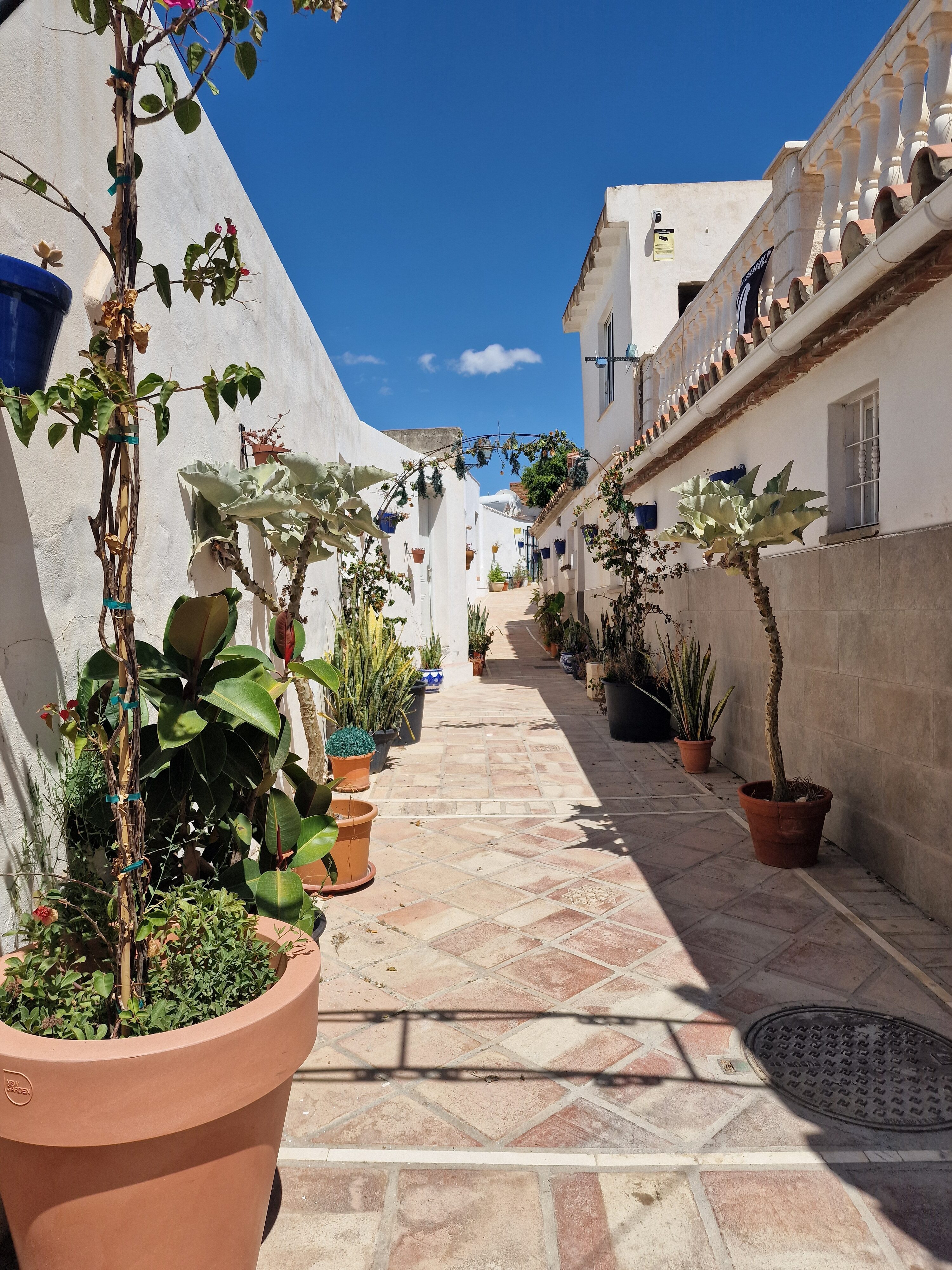
5. Casares: The Sugar-Cube Village
If you want to experience a postcard-perfect Andalusian white village without the crowds, head west toward Casares. As you round the final mountain bend on the approach road, the view of the village will take your breath away: a spectacular cascade of white houses clinging to a rocky hillside, crowned by the ruins of a medieval Moorish castle.
Casares is steep, rugged, and wonderfully authentic. It’s the birthplace of Blas Infante, the father of Andalusian nationalism, and maintains a deeply traditional, slow-paced lifestyle.
Highlights: Climbing to the old castle ruins where wild vultures nest in the cliffs, and visiting the nearby Roman sulfur baths of Hedionda.
Getting there: A 1-hour and 20-minute drive from Málaga via the AP-7 toward Estepona, then heading inland on the MA-8300.
6. Júzcar: The Smurf Village of the Genal Valley
Hidden deep within the chestnut forests of the Serranía de Ronda lies Júzcar. Until 2011, Júzcar was just another traditional white village. That changed overnight when Sony Pictures chose the village for the global premiere of The Smurfs movie and painted every single building—including the historic church and cemetery—bright blue.
The locals voted to keep the color, transforming this remote hamlet into a quirky, surreal tourist destination. It’s an incredible contrast to the surrounding green mountains and a fantastic spot for families or anyone looking for a unique photo opportunity.
Highlights: Hiking through the surrounding stunning chestnut forests and taking photos against the vibrant blue street murals.
Getting there: Roughly 1 hour and 45 minutes by car from Málaga via the A-357 and A-367 toward Ronda Public transport here is virtually non-existent, making a car essential.
7. Archidona: The Baroque Octagonal Hidden Gem
Heading north past the mountains of Málaga takes you to Archidona, a town completely overlooked by mainstream coastal tourism. Archidona’s crown jewel is the Plaza Ochavada, a magnificent, French-inspired 18th-century octagonal town square built in a striking red and white baroque style.
The town climbs up the slopes of the Sierra de Gracia, where you can explore the ruins of an ancient Moorish castle and the unique sanctuary of the Virgen de Gracia, which was built directly on top of a 9th-century mosque, preserving its original arches.
Highlights: Enjoying a quiet coffee inside the octagonal plaza and taking in the olive valley views from the hilltop sanctuary.
Getting there: An easy 45-minute drive north via the A-45 highway. Regular regional buses also run from Málaga’s main bus station.
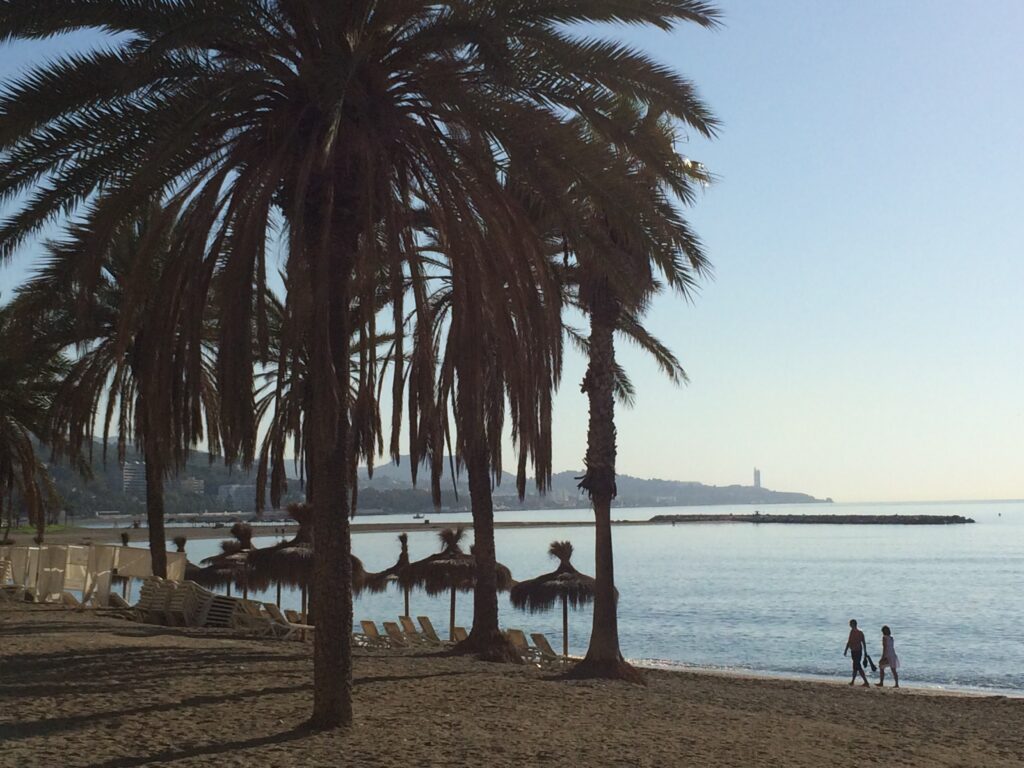
8. Rincón de la Victoria: Caves, Cliffs, and Coastal Tunnels
Just a short hop east of Málaga’s city limits lies Rincón de la Victoria. Because the commuter train line doesn’t extend to the eastern side of the coast, this vibrant seaside town has remained a favorite escape for locals rather than international tour groups, preserving a wonderfully authentic Spanish atmosphere.
The town’s absolute crown jewel is the Cueva del Tesoro (The Treasure Cave). This geological wonder is one of only three known marine caves in the entire world and the only one located in Europe. Millions of years ago, the Mediterranean Sea carved out these spectacular subterranean galleries and dark lakes, which are said to still hide a legendary hoard of Almoravid gold. Back above ground, you can stroll through the dramatic El Cantal cliffs via pedestrian walkways carved directly into old, atmospheric railway tunnels, or enjoy fresh seafood along the expansive two-kilometer beach.
Highlights: Exploring the otherworldly chambers of the Cueva del Tesoro, and walking the cliffside tunnel paths at sunset.
Getting there: An incredibly easy 20-minute drive east from Málaga via the A-7. Alternatively, frequent local coastal buses run from Málaga’s central Muelle Heredia bus station throughout the day.
9. Iznate: The Authentic Raisin Capital
For a true taste of rural Andalusian life entirely untouched by commercial tourism, make a trip to Iznate. Located in the rolling hills of the lower Axarquía, this tiny village is the historic heart of the region’s muscatel grape and raisin production.
The streets here are incredibly narrow, pristine, and lined with potted geraniums. Locals still use traditional sun-drying beds (paseros) on the surrounding hillsides to dry the grapes into rich raisins. It is an ideal stop for those looking to experience genuine local culture, friendly residents, and slow travel.
Highlights: Tasting local muscatel grapes and exploring the historic Moorish fountains scattered throughout the village.
Getting there: A 45-minute drive east from Málaga via the A-7, turning inland at Torre del Mar.
10. Vélez-Málaga: The Cultural Heart of the East
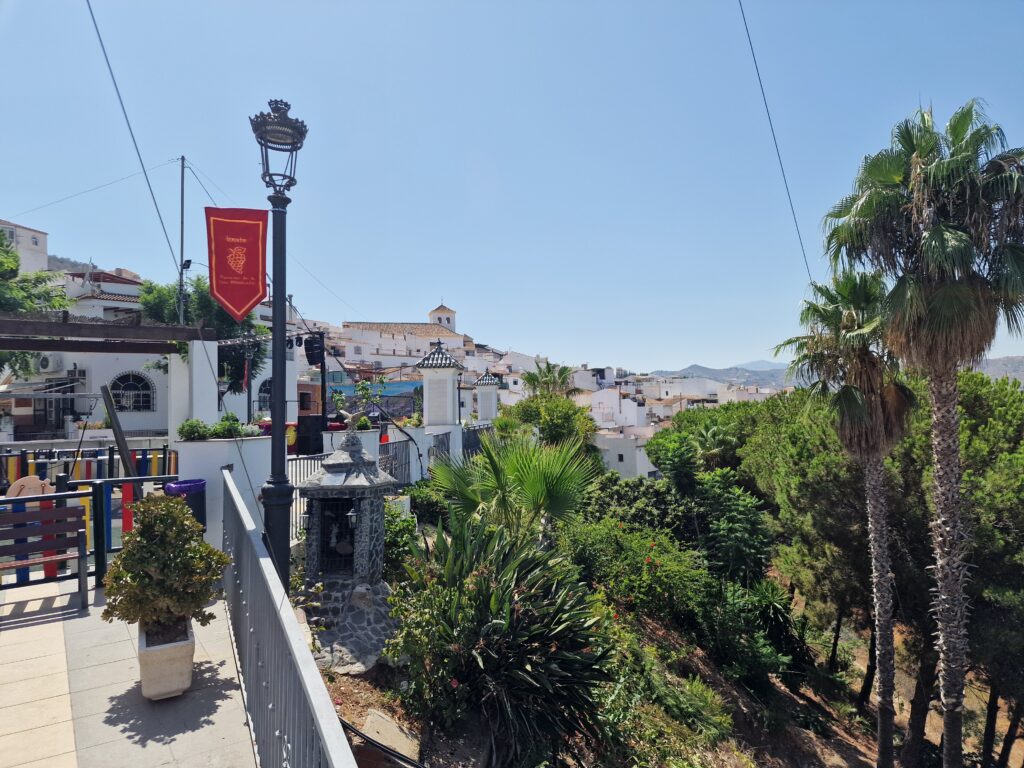
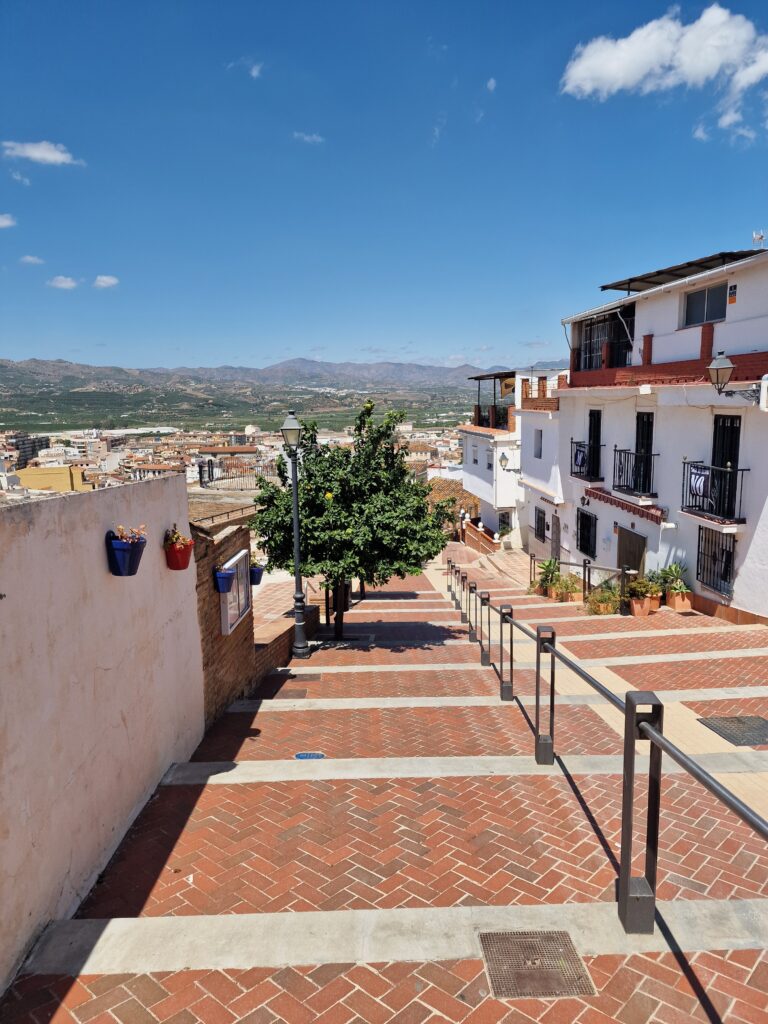
While most tourists only know the nearby beach resort of Torre del Mar, the historic city of Vélez-Málaga sits just a few kilometers inland. As the capital of the Axarquía region, it boasts an incredible wealth of architectural heritage that completely escapes the average beachgoer.
You can explore the beautifully restored Alcazaba (Moorish fortress) that overlooks the entire valley, visit the majestic Palacio de Beniel, or wander through the historic San Juan neighborhood. It offers an authentic Spanish city atmosphere filled with local tapas bars, historic squares, and no tourist crowds.
Highlights: Climbing the tower of the Moorish fortress for 360-degree views, and visiting the contemporary art museum (CAC Vélez Málaga).
Getting there: A 35-minute drive via the A-7. Frequent, direct buses run throughout the day between Málaga and Vélez-Málaga via the Alsa bus network.
For a shorter drive focused on local culture and traditional sweet wines, consider exploring the nearby hills of Moclinejo and Benagalbón.
11. The Montes de Málaga National Park
You don’t have to drive far to escape the coastal heat. Directly north of the city limits lies the Montes de Málaga, a massive pine-forested regional park that serves as the “green lungs” of the city.
The winding mountain road (the old Carretera de Colmenar) offers dramatic views looking back down over the Málaga bay. The park is famous for its network of shaded hiking trails, hidden stone ruins of old wine-pressing estates (lagares), and its legendary roadside restaurants (ventas).
Highlights: Stopping at a traditional mountain restaurant to eat a Plato de los Montes (a hearty local dish of pork, chorizo, peppers, and fried potatoes).
Getting there: A 20-to-30-minute drive north from the city center up the A-7000 road. This trip requires a car to fully explore the trailheads and viewpoints.
Top Experiences and Guided Activities for Your Day Trips
Make your journey even more memorable by booking an official guided experience. From walking the famous canyons to exploring historic palaces, securing your tickets online guarantees your entry and lets you skip the long ticket lines.
Tips for Navigating Beyond the Tracks
Car Rental: Renting a car from Málaga Airport or the Maria Zambrano area gives you absolute freedom. Stick to smaller manual cars if possible, as navigating the extremely narrow streets of white mountain villages can be nerve-wracking in a large SUV.
Bus Scheduling: While companies like Alsa and Avanza connect larger hubs like Nerja, Ronda, and Vélez-Málaga frequently, mountain villages like Comares or Júzcar have very limited timetables. Always check the return schedules ahead of time so you don’t get stranded!