
Independent Guide to Cultural Festivals in Costa del Sol:
Traditions, Music, and Local Celebrations
Beyond its golden beaches and Mediterranean climate, Spain’s southern coast houses a rich tapestry of cultural heritage. The Costa del Sol and its surrounding inland valleys host dozens of traditional festivals every year. These events reflect centuries of Andalusian history, blending Catholic traditions, Moorish roots, agricultural harvests, and contemporary performing arts.
Whether you are exploring the narrow whitewashed alleyways of mountain villages or wandering the historic centers of coastal cities, experiencing a local fiesta offers an authentic look into the soul of Andalusia.
Take the Festival Guide With You (Free PDF)
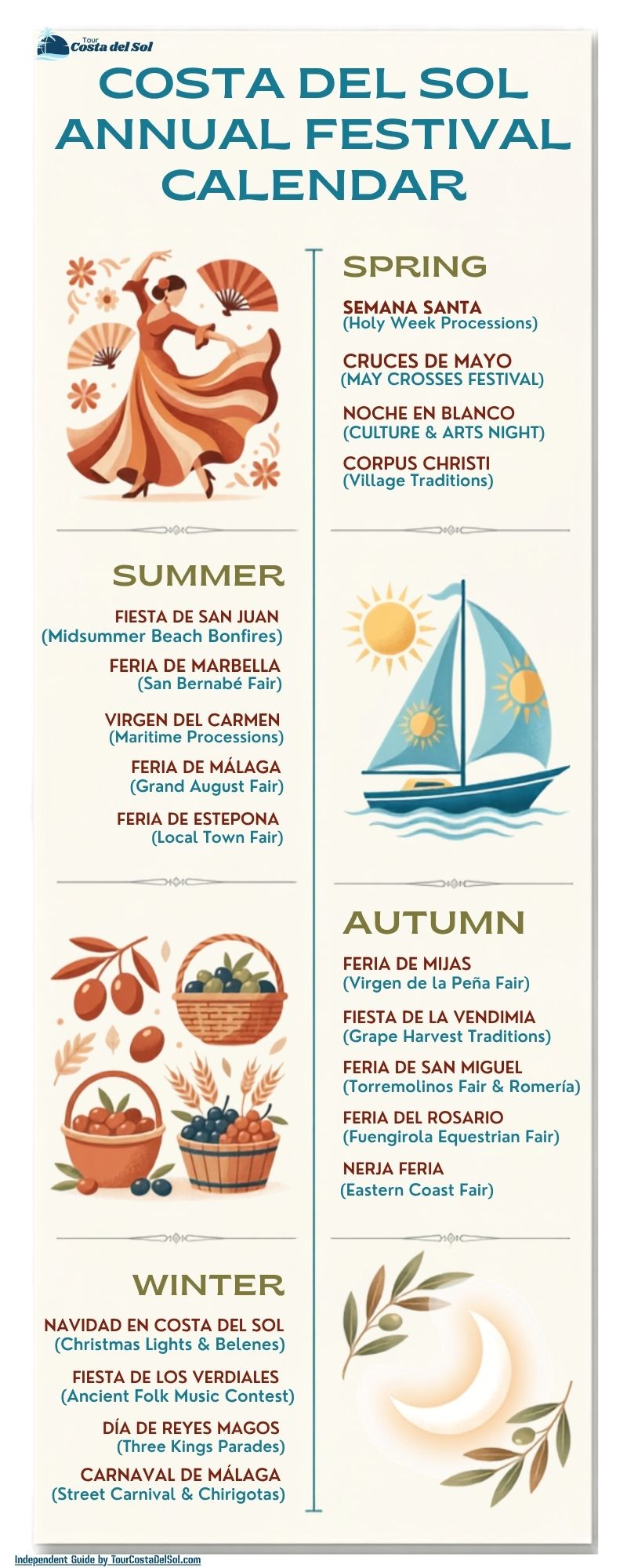
Download our 1-page printable cheat sheet covering all 19 annual ferias, locations, and travel tips for offline reference.
Spring: Sacred Processions and Floral Traditions
Spring in southern Spain is defined by sensory transformation: orange blossoms perfume the streets, temperatures become ideal for outdoor gatherings, and centuries-old religious traditions come alive.
Semana Santa (Holy Week)
When: March or April (The week leading up to Easter Sunday)
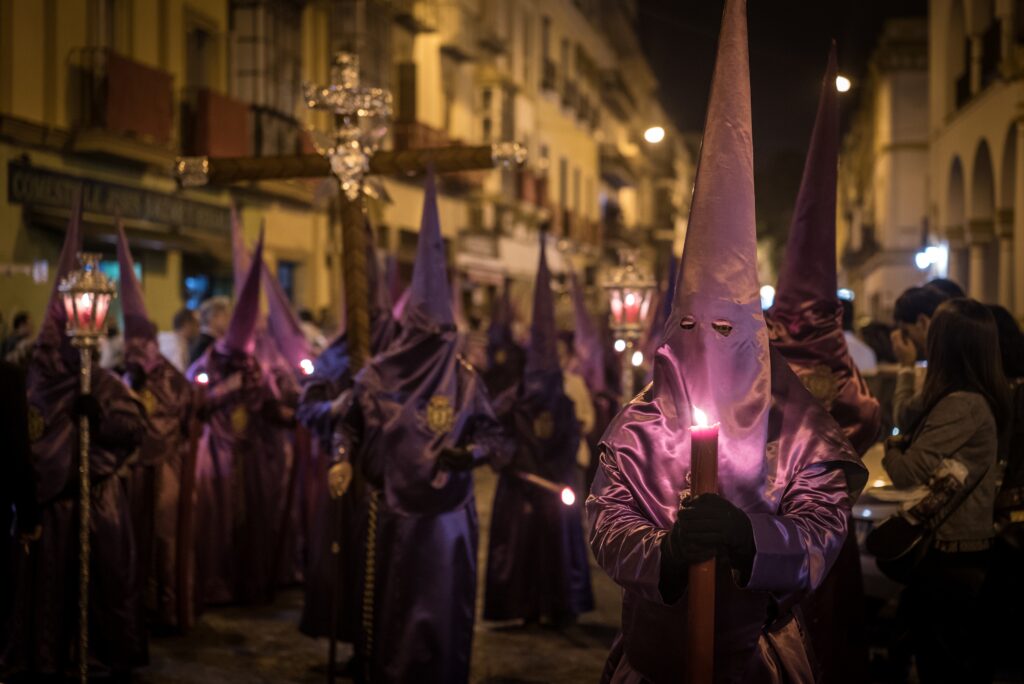
Holy Week is arguably the most significant cultural event across Andalusia. Occurring in late March or April, it features dramatic religious processions that draw thousands of spectators.
Málaga City Processions: Unlike the somber, silent processions found in northern Spain, Málaga’s Holy Week is dynamic and passionate. Massive wooden floats called tronos, carrying elaborate statues of Jesus and the Virgin Mary, are borne through the streets by hundreds of portadores (throne bearers). The atmosphere is charged with traditional saeta songs sung live from balconies, accompanied by solemn brass bands and incense.
Vélez-Málaga & Antequera: For a more intimate yet equally historic experience, the inland towns of Vélez-Málaga and Antequera host processions noted for their artistic heritage. In Antequera, a unique tradition known as correr el trono involves bearers running up steep cobbled hills carrying heavy floats to finalize the procession.
Cruces de Mayo (May Crosses)
In early May, towns across the region celebrate the arrival of spring by constructing large floral crosses in public squares, courtyards, and street corners. Neighborhood associations compete to build the most intricate displays using carnations, roses, traditional ceramics, and embroidered shawls. Temporary outdoor bars (ambigús) serve local tapas, cold wine, and beer while residents gather to dance sevillanas.
Corpus Christi
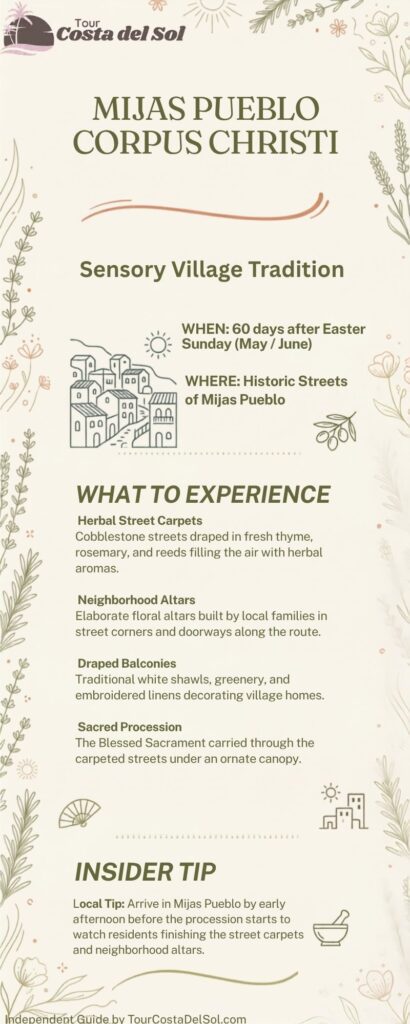
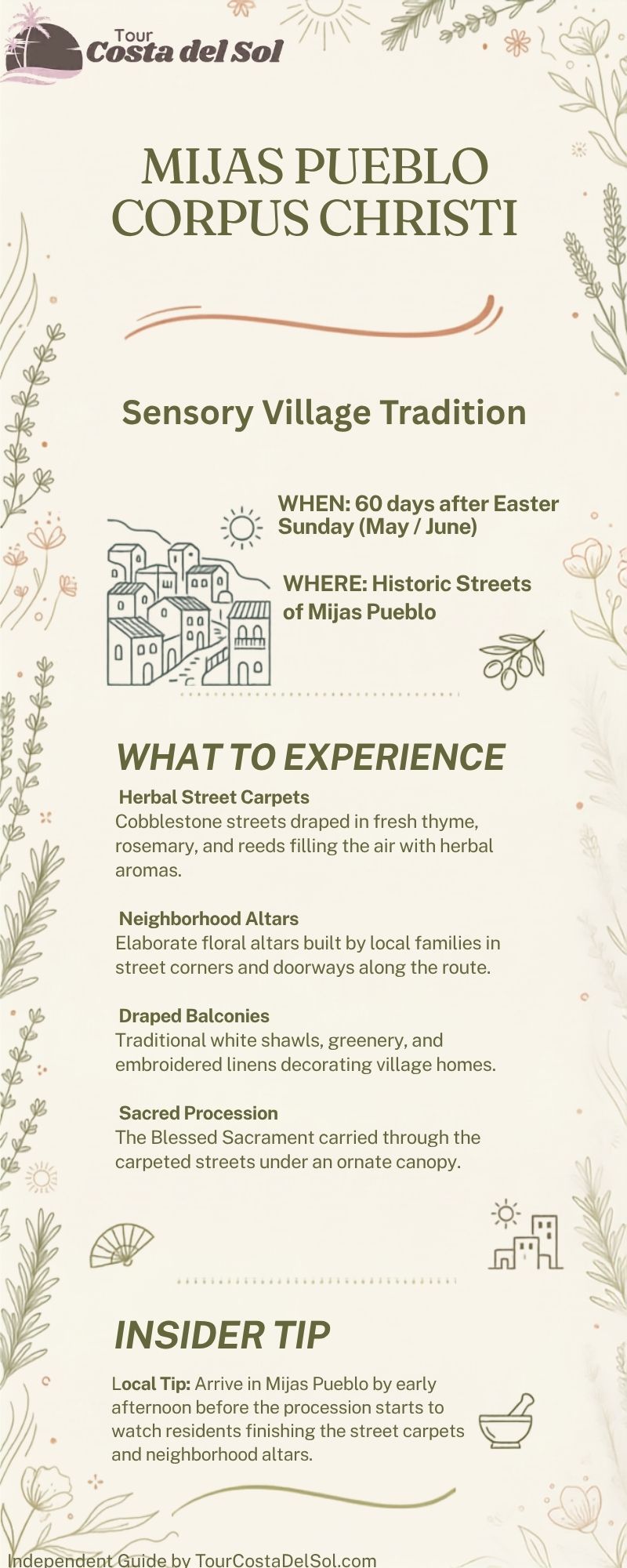
Celebrated 60 days after Easter Sunday, Corpus Christi transforms town centers across the region with a distinctly Andalusian custom: streets are carpeted with fresh thyme, rosemary and reeds, while balconies are draped in white sheets and greenery for the procession of the Blessed Sacrament beneath an ornate canopy. Mijas is one of the best places to see this tradition intact, with elaborately decorated altars built by neighbors along the processional route through the historic center.
Noche en Blanco (White Night)
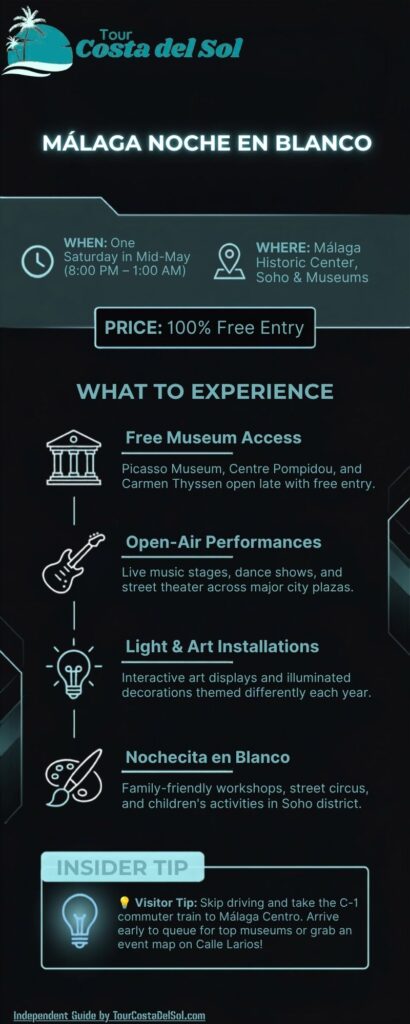
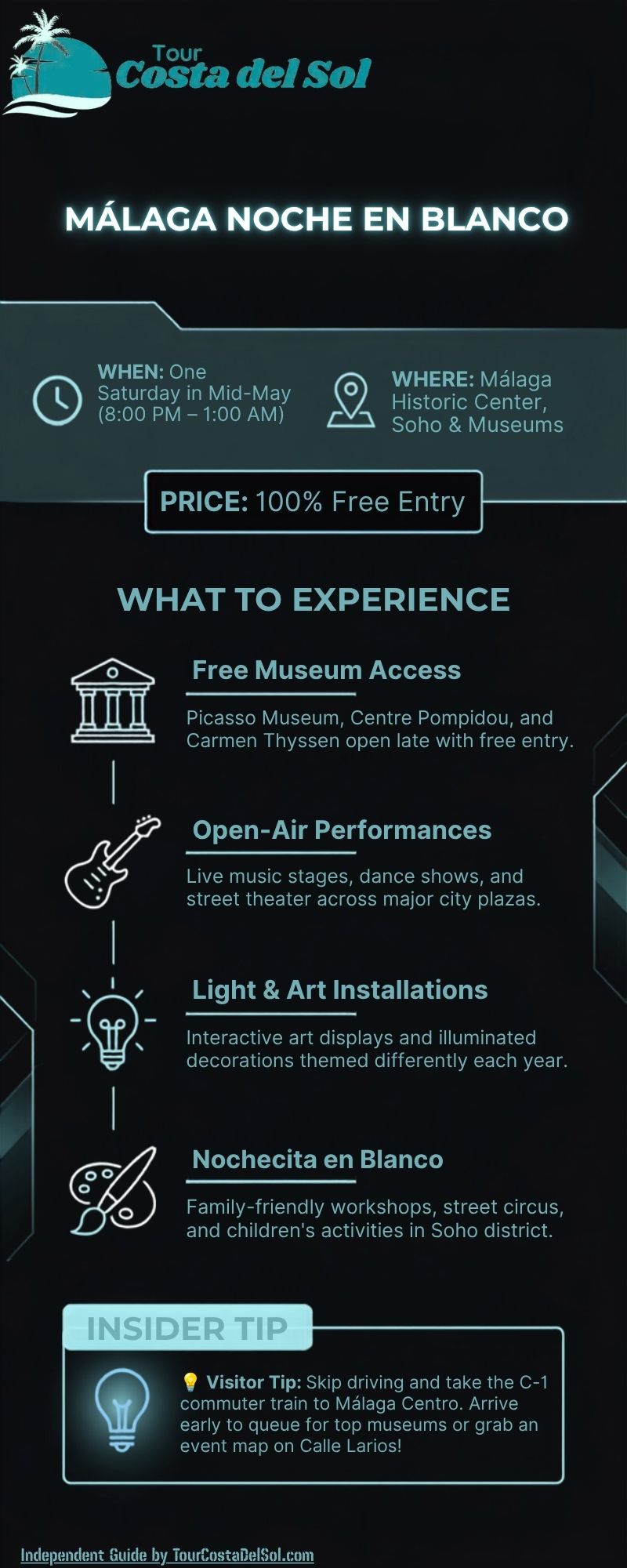
For one night each May, Málaga’s museums, churches and cultural spaces throw open their doors for free until the early hours. Streets fill with live music stages, art installations and family workshops from 8:00 PM to 1:00 AM, with major venues like the Picasso Museum and Málaga Cathedral offering special after-hours programming. It’s the most accessible entry point into the city’s contemporary arts scene, and unlike the religious festivals on this list, it costs nothing to attend.
Summer: Coastal Bonfires, Grand Ferias, and Open-Air Music
Summer brings long evenings and high-energy celebrations. Coastal cities and mountain towns turn public spaces into open-air venues for summer fairs, midsummer rituals, and world-class music festivals.
San Bernabé (Feria de Marbella)
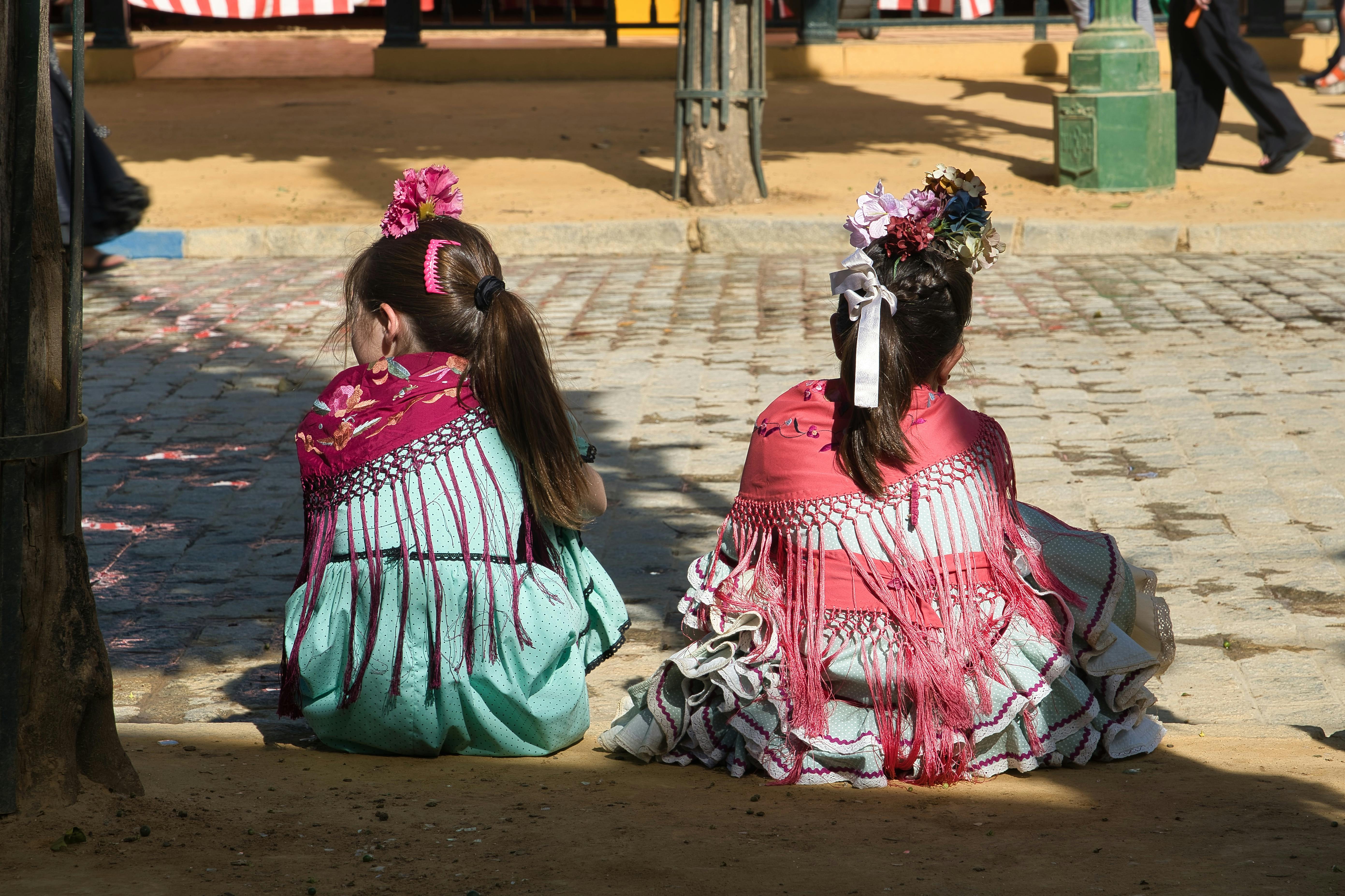
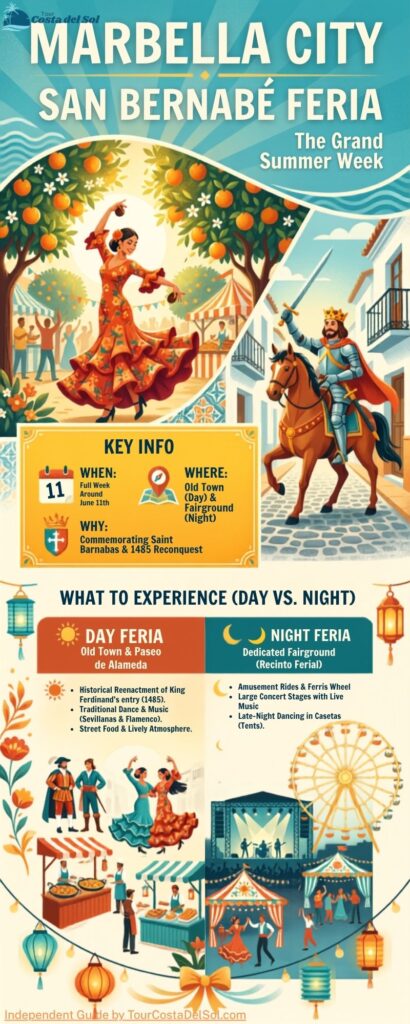
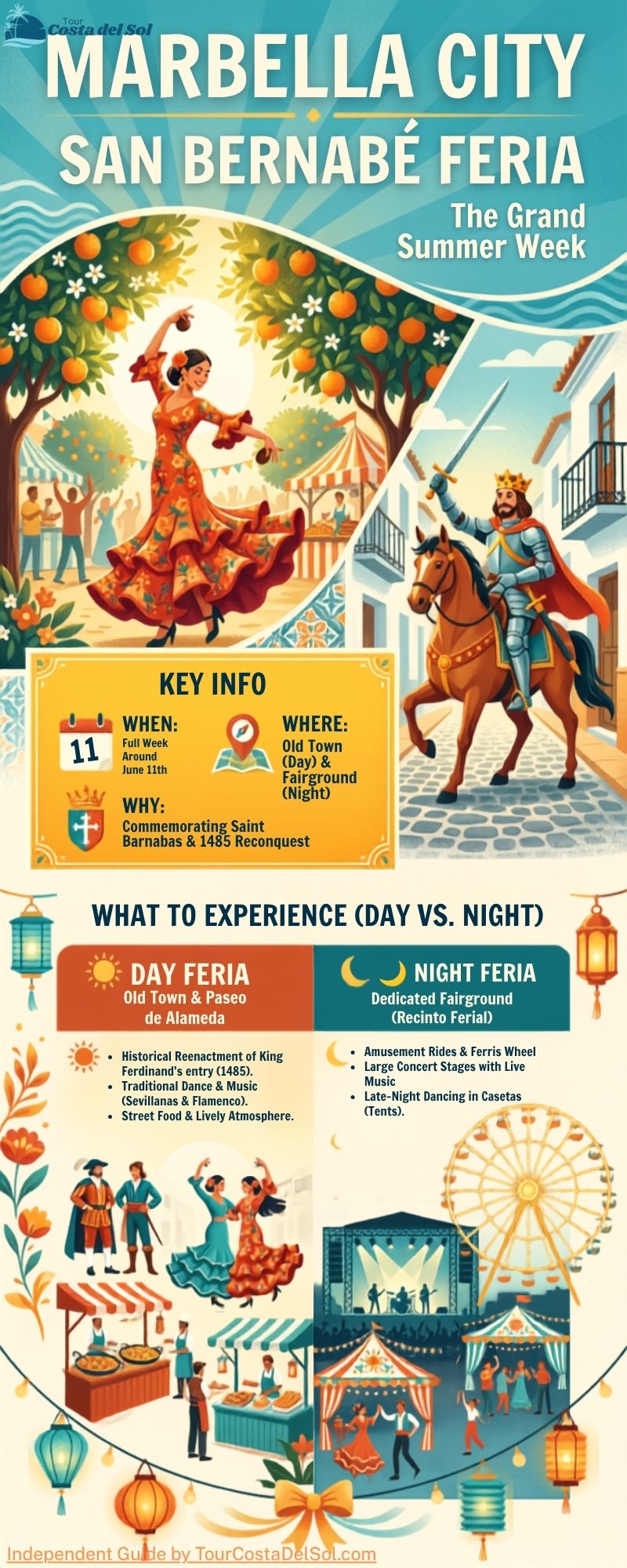
Marbella’s biggest celebration of the year runs for a full week around June 11th, the feast day of Saint Barnabas, the city’s patron saint — commemorating the town’s reconquest by the Catholic Monarchs in 1485. The Feria de Día fills the old town and Paseo de la Alameda with flamenco dress, sevillanas and street food, while the Feria de Noche takes over the fairground with concerts and fairground rides until dawn. A historical reenactment of King Ferdinand’s entry into the city and a solemn procession to the Ermita de San Bernabé in Nagüeles Park round out the more traditional side of the week.
Noche de San Juan (Night of Saint John)
On the night of June 23rd, the entire coastline transforms into a massive beachfront festival celebrating the summer solstice.
Beach Bonfires & Rituals: Friends and families gather on beaches from Nerja to Estepona to build fires and grill sardines (espetos).
Effigy Burning: At midnight, handcrafted rag dolls or paper-mâché effigies called júas are set ablaze on the fire to symbolize burning away bad luck.
Midnight Swims: Tradition dictates jumping over low bonfires three times or running into the ocean at midnight to wash away negative energy and ensure good fortune for the upcoming year.
Virgen del Carmen
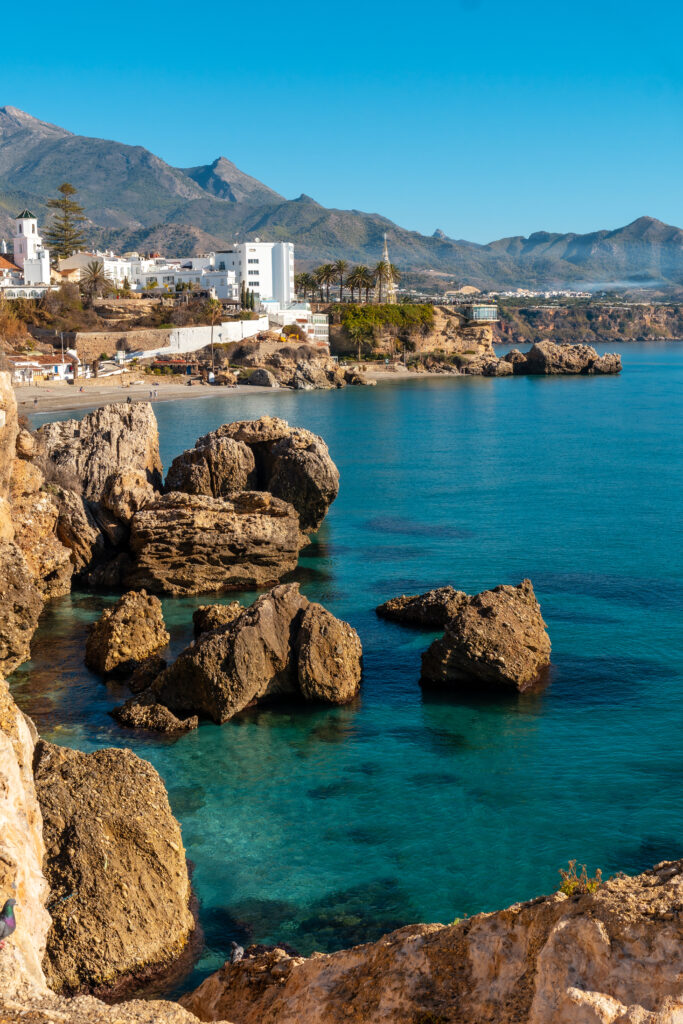
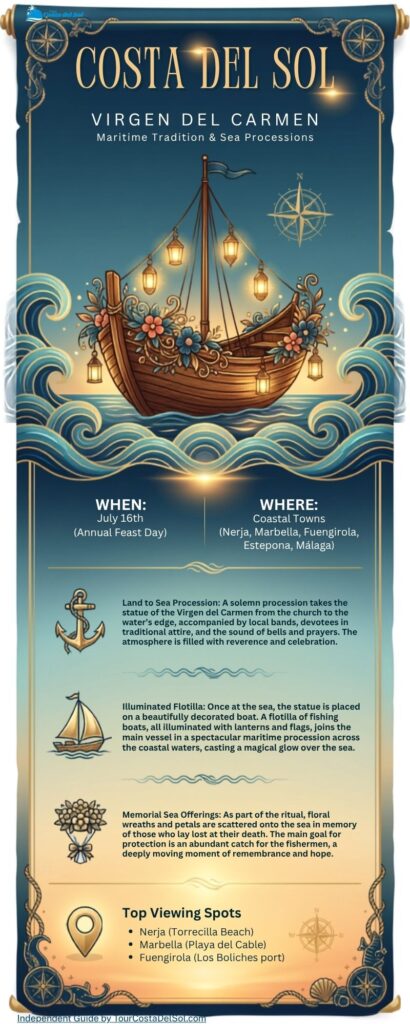
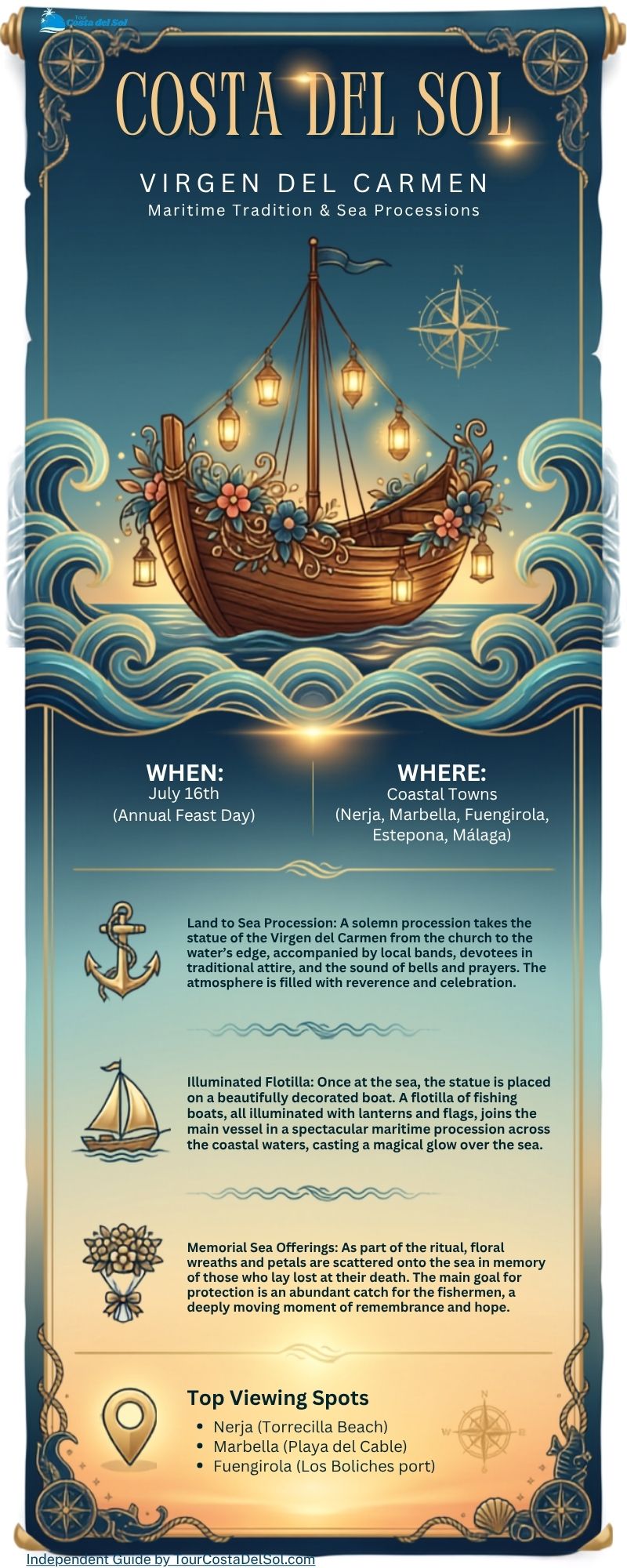
On July 16th, patron saint of sailors and fishermen, the Virgen del Carmen is carried from her parish church down to the water in nearly every coastal town from Nerja to Estepona. The image is placed aboard a decorated fishing boat and taken out to sea, escorted by a flotilla of smaller boats lit with lanterns and flowers — a moment locals treat with real solemnity, since in towns with working fishing fleets it also honors those lost at sea. Nerja’s version, launching from Torrecilla beach against the cliffs below the Balcón de Europa, and Marbella’s, which pairs a dawn Mass on Playa del Cable with an evening land procession, are among the most photogenic.
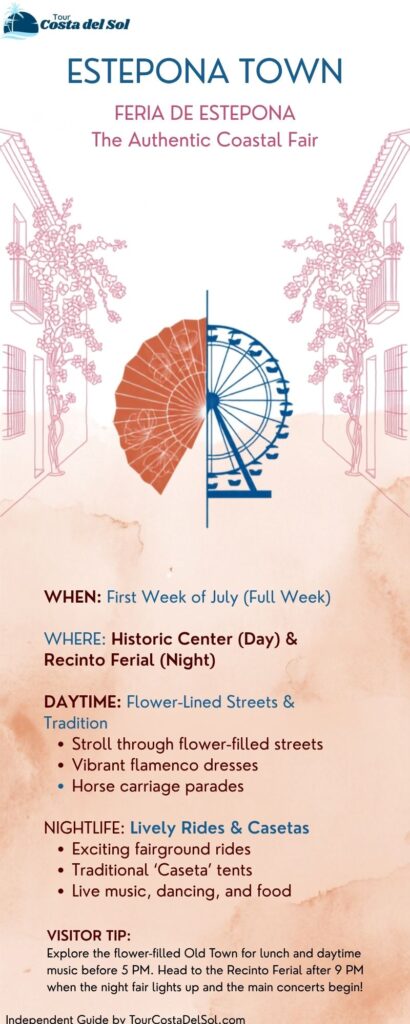
Feria de Estepona
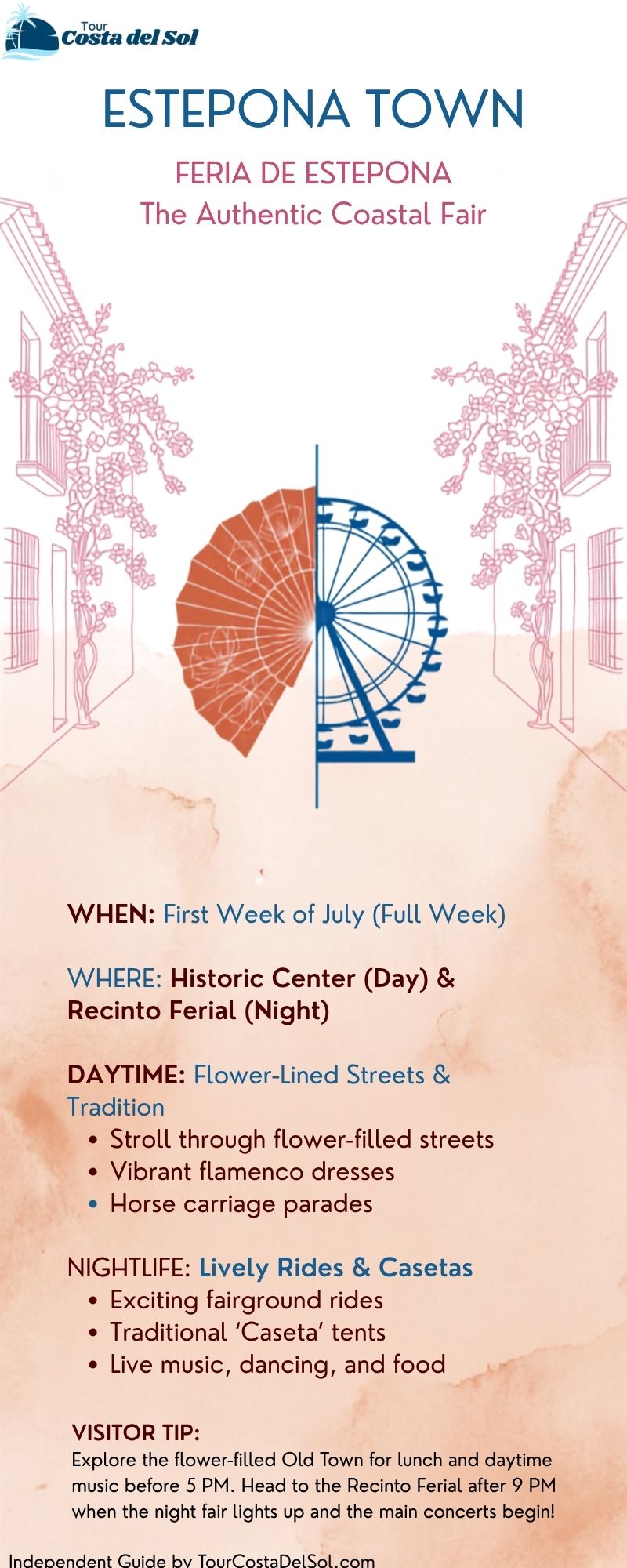
Estepona’s week-long summer fair fills the town’s historic center and dedicated fairground with daytime flamenco dress and nighttime concerts, following the same day/night rhythm as its larger neighbors — but with a noticeably more local, less touristic crowd than Marbella or Málaga.
Feria de Agosto (Málaga August Fair)
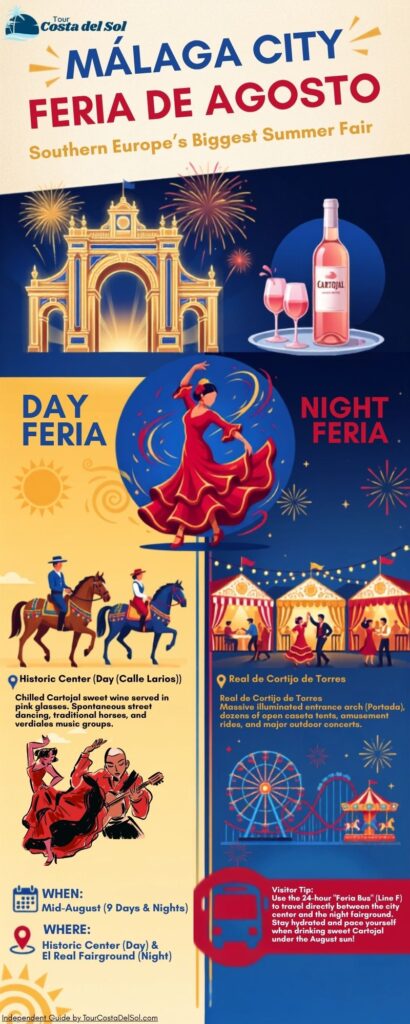
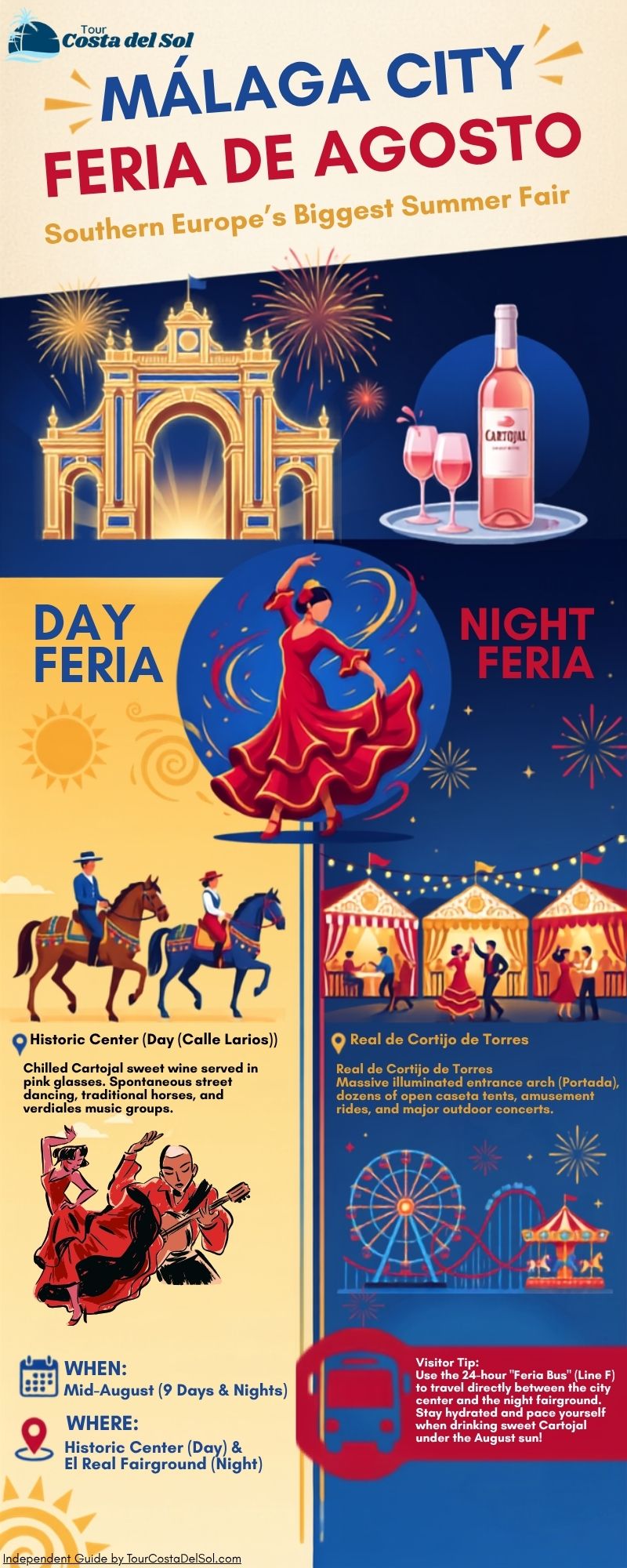
Málaga’s grand annual fair commemorates the city’s incorporation into the Crown of Castile in 1487. Held over nine days in mid-August, it is one of the largest summer festivals in Southern Europe.
Málaga August Fair Structure
Feria de Día
- 📍 Location: Historic City Center
- ⏰ Hours: 12:00 PM – 6:00 PM
- ✨ Highlights: Street music, live flamenco, chilled Cartojal wine, horse-drawn carriage parades.
Feria de Noche
- 📍 Location: Real de Cortijo de Torres
- ⏰ Hours: 8:00 PM – Late Night
- ✨ Highlights: Amusement rides, large casetas, live concerts, horse shows, light installations.
Festival de las Tres Culturas (Frigiliana)
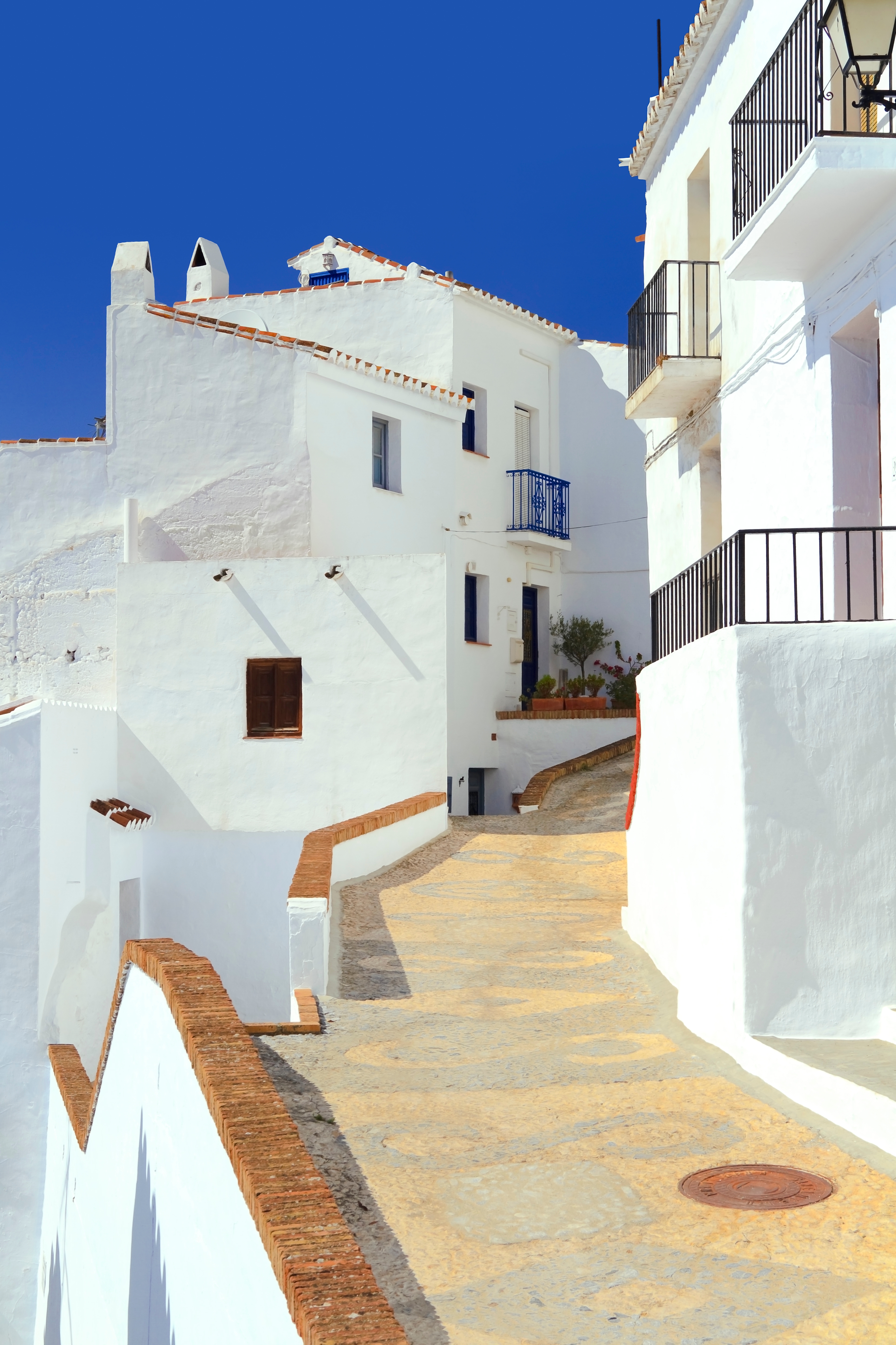
Held in late August in the picturesque village of Frigiliana, this four-day festival celebrates the historic peaceful co-existence of Christian, Jewish, and Muslim traditions in the region.
The Tapas Route: Visitors wander through illuminated, cobbled streets sampling special tapas designed specifically for the festival.
Arts & Performance: The village features artisan craft markets, street theater, fire dancers, and musical performances blending Sephardic, Andalusian, and Middle Eastern roots.
Feria de Benalmádena Pueblo
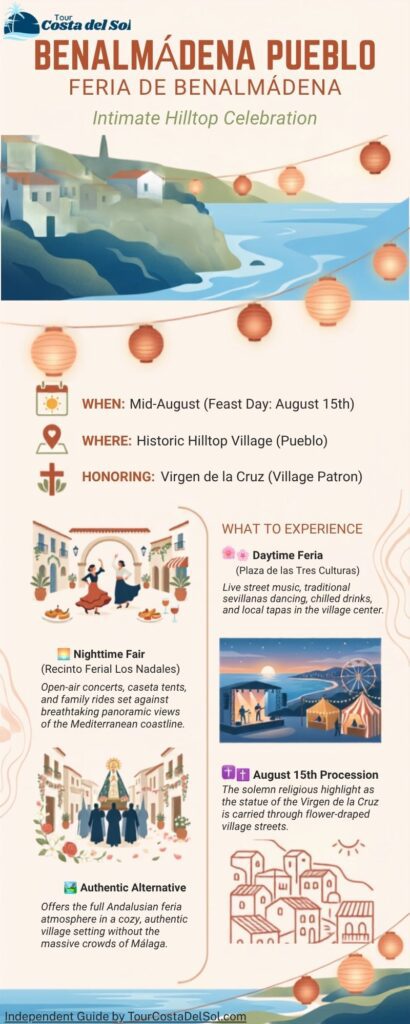
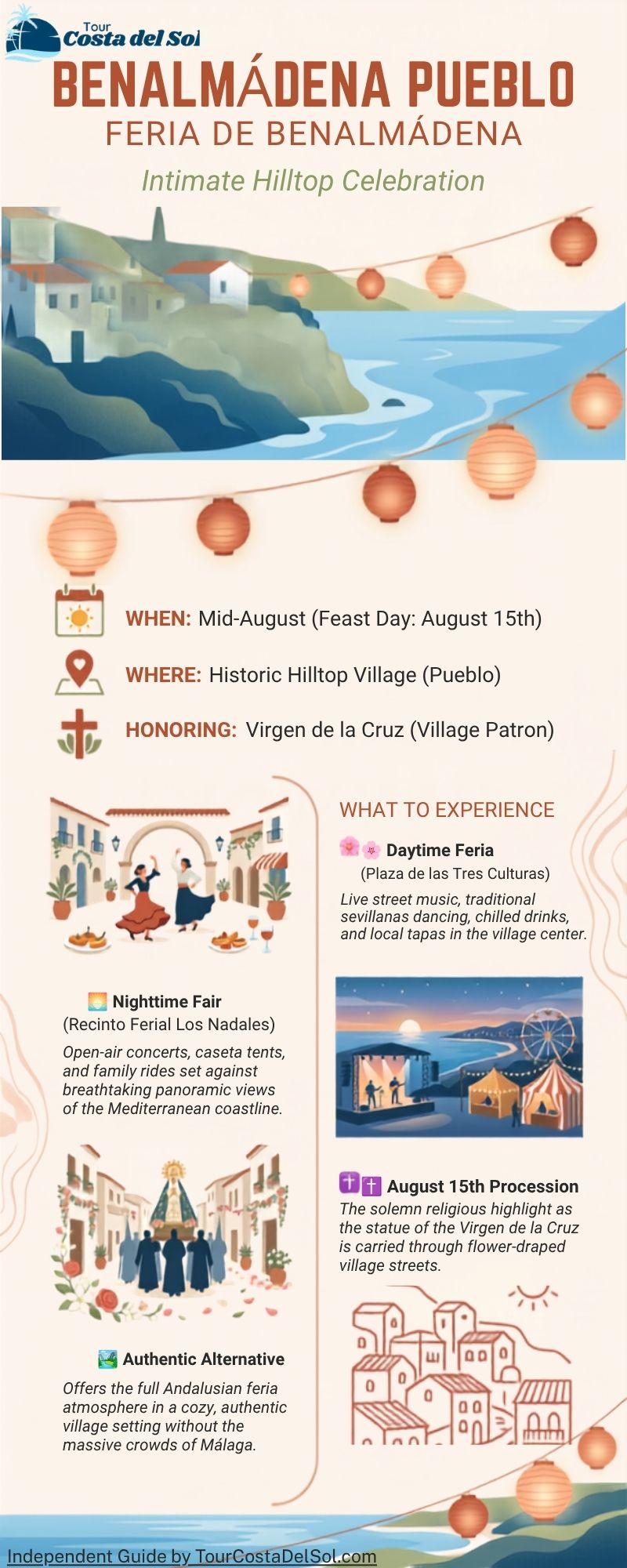
In mid-August, Benalmádena Pueblo — the hilltop old town, distinct from the coastal resort strip below — celebrates its patron, the Virgen de la Cruz, with five days of concerts at the Recinto Ferial Los Nadales and a daytime Feria de Día in Plaza de las Tres Culturas. The religious high point falls on August 15th, when the Virgin’s image is processed through the village streets. It’s a smaller, more intimate alternative to Málaga’s Feria de Agosto for visitors who want the same atmosphere without the crowds.
Starlite Occident (Marbella)
For contemporary arts and music enthusiasts, Starlite in Marbella offers a unique boutique festival experience running throughout July and August. Set inside an abandoned quarry (Cantera de Nagüeles) with natural acoustic walls, the venue hosts international pop, rock, and jazz headliners in an intimate outdoor setting.
Autumn: Heritage, Horses, and Harvest Fiestas
As the summer heat subsides, autumn festivals shift focus toward agricultural harvests, regional folklore, equestrian skill, and historical commemorations.
Feria de Mijas
Mijas Pueblo’s main annual fair, held in early-to-mid September, honors the Virgen de la Peña — the village’s patron saint and, by local tradition, its “perpetual mayoress.” The feast day itself, September 8th, brings a solemn procession through the whitewashed streets, while the surrounding week mixes a giants-and-big-heads parade for children, live music in the fairground, and a daytime fair in the Jardines de la Muralla with sweeping views over the coast.
Feria de San Miguel (Torremolinos)
Timed to the September 29th feast of Saint Michael, Torremolinos’ patronal fair combines a traditional romería (pilgrimage) with a full week of concerts, casetas and street festivities — one of the last big local ferias before the season turns toward autumn’s harvest festivals.
Feria de Pedro Romero & Corrida Goyesca (Ronda)
Held in early September in the historic cliffside city of Ronda, this fair honors 18th-century bullfighter Pedro Romero.
The highlight is the Corrida Goyesca, where participants and spectators wear authentic 18th-century attire inspired by the paintings of Francisco de Goya. The town hosts horse-drawn carriage parades, traditional music recitals, and vibrant street fairs throughout the week.
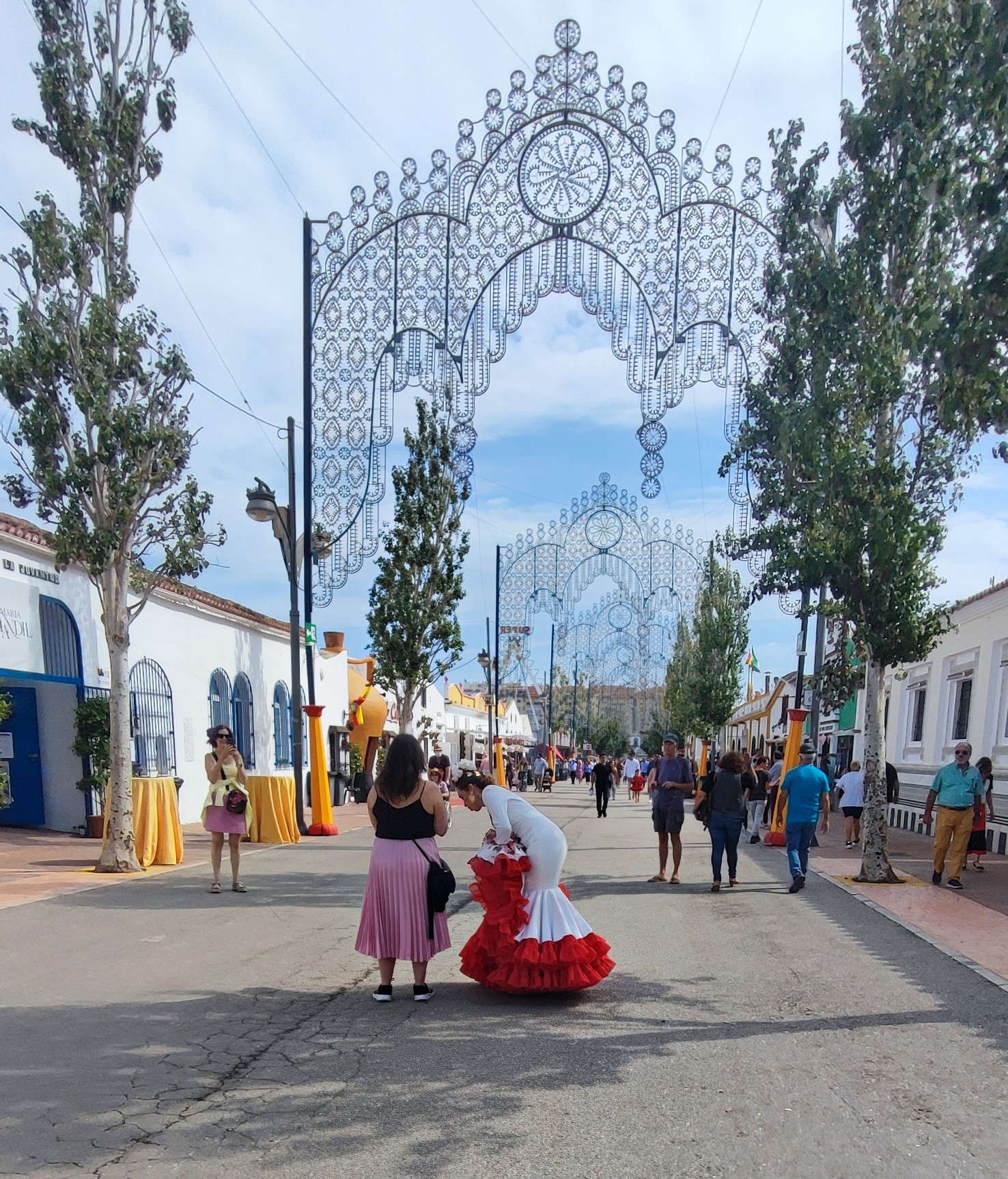
Feria del Rosario (Fuengirola)
Taking place in early October, Fuengirola’s main annual fair is widely recognized as one of the best equestrian festivals in Andalusia. Beautifully groomed Andalusian horses take center stage during daytime parades, with riders dressed in traditional traje corto suits alongside women in colorful flamenco dresses.
Nerja Feria
Nerja’s own town fair takes place in early-to-mid October, closing out the region’s feria season on the eastern Costa del Sol with the same blend of daytime flamenco dress, evening concerts and fairground rides found further west — a good option for visitors based around Nerja who want the full feria experience without the crowds of Fuengirola or Málaga.
Autumn Gastronomic Fiestas
Mountain villages across the Serranía de Ronda and Axarquía regions host single-day harvest festivals celebrating seasonal produce:
Fiesta de la Castaña (Pujerra & Alcaucín): Celebrates the chestnut harvest with free roasted chestnuts, traditional anise liquors, and folk music.
Fiesta del Mosto (Atajate): Honors the first grape juice pressings of the autumn season, complete with wine tastings and local gastronomy.
Winter: Ancient Folklore and Street Carnival
Winter in the Costa del Sol offers clear skies, mild days, and cultural events focused on historic folk traditions and pre-Lenten carnivals.
Fiesta Mayor de Verdiales (Málaga)
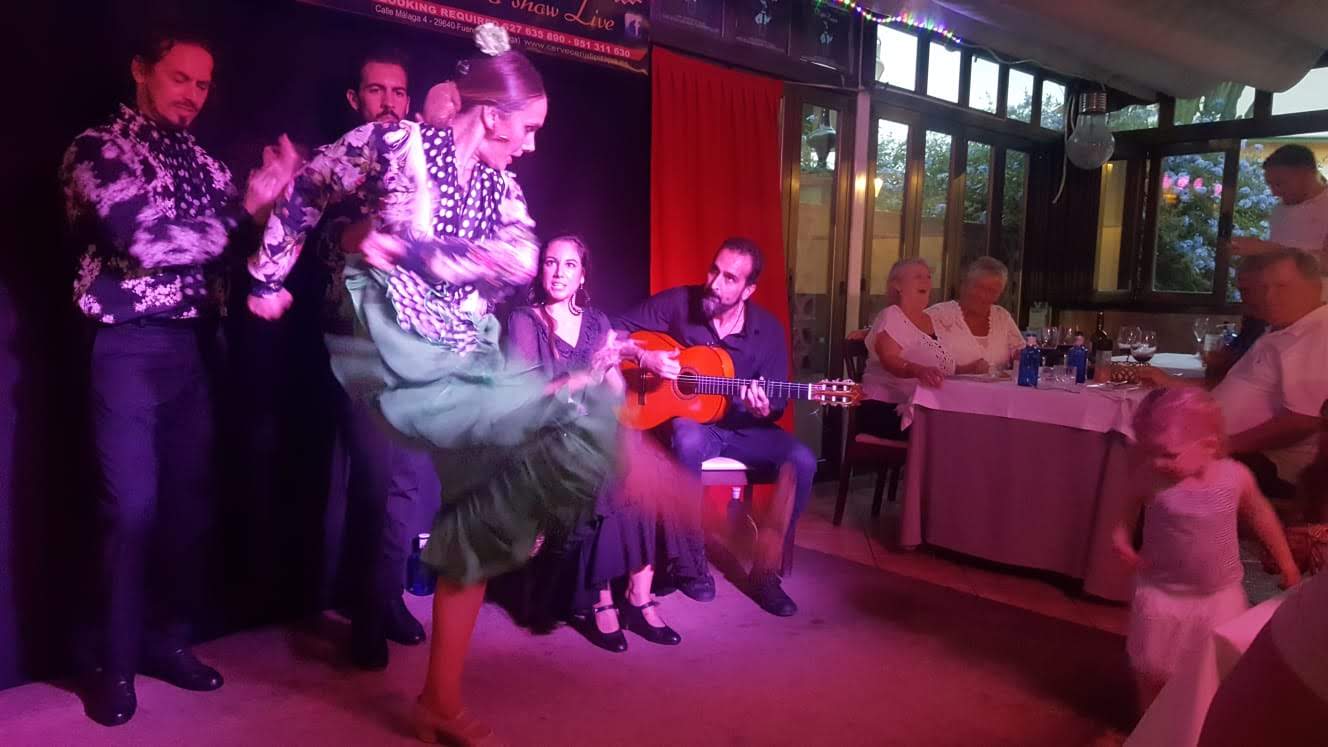
On December 28th, on the outskirts of Málaga city, dozens of musical groups called pandas gather for the annual Verdiales contest.
Verdiales is one of the oldest living folk traditions in Europe, predating modern flamenco. Musicians wear elaborate hats decorated with colorful ribbons, flowers, and mirrors while playing energetic arrangements of violins, guitars, tambourines, and castanets.
Día de Reyes (Three Kings)
On the evening of January 5th, every town along the coast holds a Cabalgata de Reyes — an elaborate parade in which the Three Kings arrive by float, camel, boat or even helicopter depending on the town, throwing sweets to children lining the streets. It’s the traditional day Spanish children receive their Christmas gifts (January 6th), making the cavalcade the night before one of the most family-oriented events of the year, and a natural bookend to the Christmas lights and nativity scenes (belenes) that go up across the region in December.
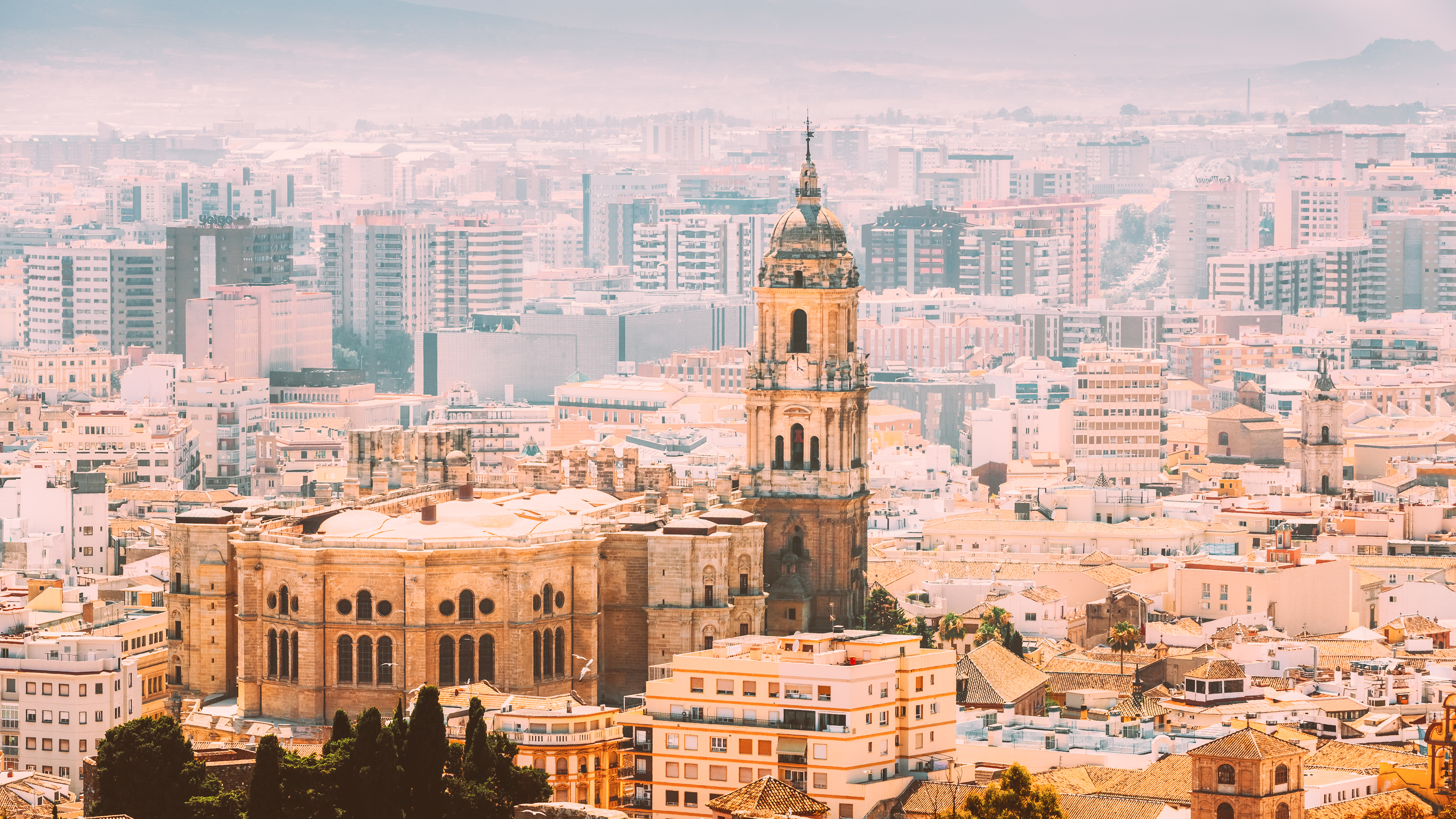
Málaga Carnival
Occurring in February prior to Ash Wednesday, Carnival fills city streets with color, humor, and satirical song competitions. Groups known as chirigotas perform witty musical numbers poking fun at local politics and current events. The festivities end with the Entierro de la Boquerona (Burial of the Anchovy), a humorous funeral procession down to Malagueta beach where a giant giant fish effigy is burned.
Overview of Major Cultural Festivals
| Month | Festival / Tradition | Location | Type | Best For |
|---|---|---|---|---|
| January | Día de Reyes / Three Kings | Costa del Sol | Tradition / Family | Families & Parade Atmosphere |
| February–March | Carnival | Málaga & coastal towns | Culture / Street | Costumes & Street Celebrations |
| March–April | Semana Santa | Málaga & Costa del Sol | Religious / Cultural | Authentic Andalusian Culture |
| May | Cruces de Mayo / Día de la Cruz | Nerja, Maro, Vélez-Málaga & others | Traditional | Floral Displays & Local Music |
| May–June | Corpus Christi | Selected towns including Mijas | Religious / Cultural | Village Traditions |
| May/June | Noche en Blanco | Málaga | Arts / Culture | Museum & Art Lovers |
| June | San Bernabé / Feria de Marbella | Marbella | Feria / Tradition | Local Marbella Vibe |
| June | San Juan | Costa del Sol beaches | Beach / Tradition | Nighttime Beach Parties |
| July | Virgen del Carmen | Coastal towns | Maritime / Religious | Coastal & Maritime Heritage |
| July | Feria de Estepona | Estepona | Feria / Local culture | Traditional Town Feria |
| August | Feria de Málaga | Málaga | Major Feria | Big Festival & Nightlife |
| August | Feria de Benalmádena Pueblo | Benalmádena | Feria / Tradition | Village Atmosphere & Views |
| September | Feria de Mijas / Virgen de la Peña | Mijas | Feria / Tradition | Mountain Village Culture |
| September | Feria de San Miguel | Torremolinos | Feria / Romería | Pilgrimage & Street Atmosphere |
| September | Vendimia / Grape Harvest traditions | Axarquía wine villages | Wine / Rural culture | Food & Wine Enthusiasts |
| October | Feria del Rosario | Fuengirola | Feria / Tradition | Equestrian & Flamenco Culture |
| October | Nerja Feria | Nerja | Feria / Local culture | Eastern Costa del Sol Vibe |
| December | Christmas lights & belenes | Costa del Sol | Christmas tradition | Light Displays & Holiday Spirit |
| December 28 | Fiesta de Verdiales | Málaga / Montes de Málaga | Music / Cultural heritage | Authentic Folk Music & Insider Culture |
Take the Festival Guide With You (Free PDF)
Download our 1-page printable cheat sheet covering all 19 annual ferias, locations, and travel tips for offline reference.
Practical Tips for Festival Visitors
Timing and Daily Schedules: Southern Spanish festivals operate on local hours. Afternoon events typically lull between 3:00 PM and 6:00 PM during siesta hours. Evening street celebrations and fairground activities rarely peak before 10:00 PM and often run until dawn.
Public Transportation: Driving and parking near festival grounds can be extremely challenging due to road closures. Use public transit whenever possible. The C-1 commuter train line runs frequently between Málaga city center, Torremolinos, Benalmádena, and Fuengirola.
Footwear and Attire: Wear comfortable shoes for walking on historic cobblestones or navigating sprawling fairgrounds. While summer fairs encourage lightweight casual clothing, religious events like Holy Week call for modest attire out of respect for local traditions.
Hydration and Sun Protection: Summer fairs like the Feria de Agosto involve spending long hours outdoors in direct sun. Keep water on hand, seek shade during peak solar hours, and pace yourself when sampling sweet regional wines like Cartojal.